



SHOPPING CART
Your cart is empty.
shop now
Your cart is empty.
shop now
Research and quality control teams deal with unpredictable results when they use substandard thermal analysis tools. Choosing the right DSC pans can dramatically improve reliability in complex tests.
DSC pans are used to analyze thermal properties across industries—material science, pharmaceuticals, polymers, and food. Their applications help uncover melting points, crystallinity, and chemical stability in routine and advanced research.
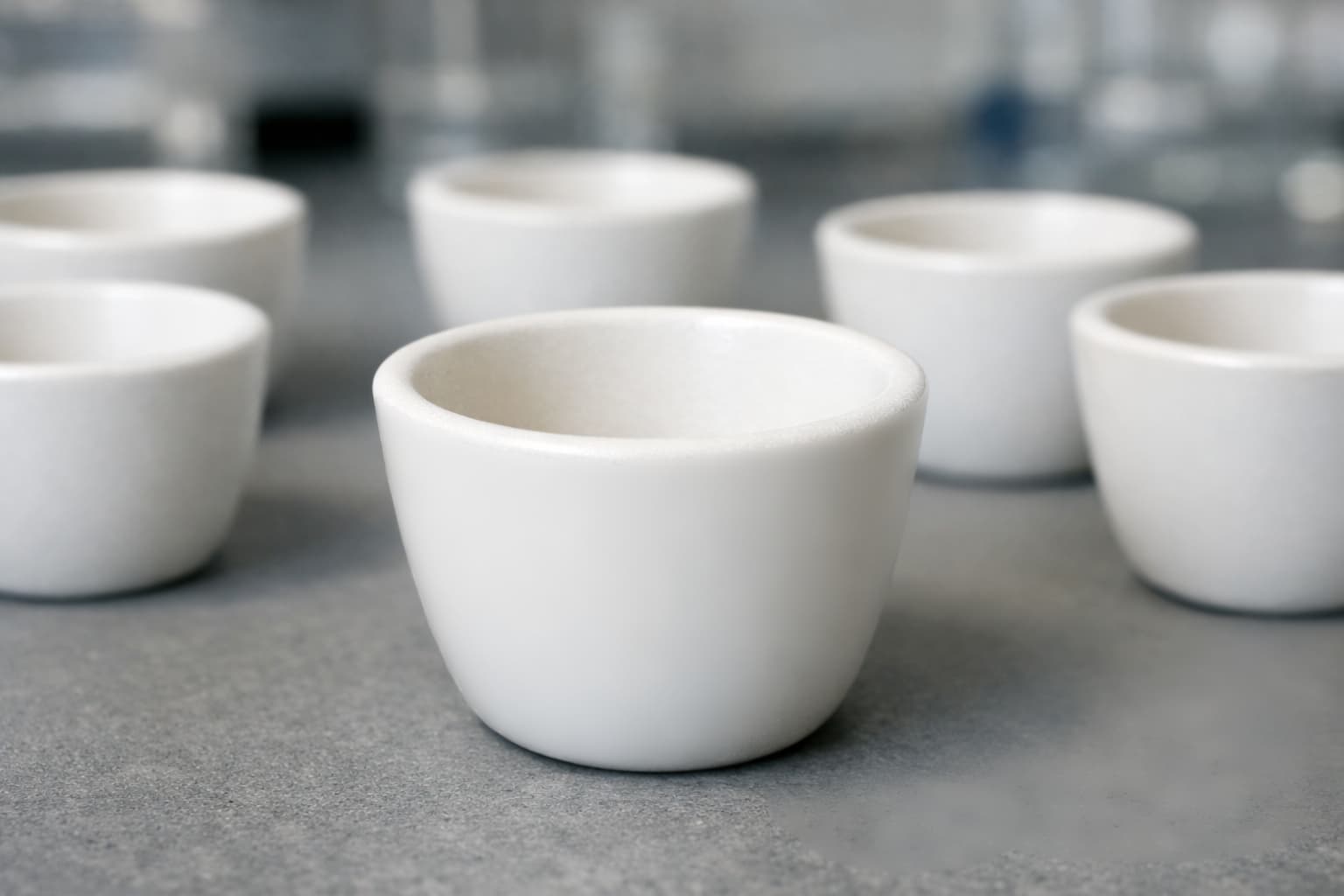
Reliable thermal properties data helps me make accurate decisions in every project. With the right DSC pans, I reduce the risk of retesting and build better product foundations. Below, I will break down how DSC pans support testing in science and industry, from research labs to manufacturing floors.
Labs often struggle to characterize new metals or alloys without the correct setup. DSC pans are necessary for analyzing thermal transitions and phase changes in material science.
Material scientists use DSC pans to measure phase transitions, heat of fusion, and glass transition temperatures. This helps them understand the structure and stability of metals, alloys, and advanced composites.
| Property Measured | Material Type | Testing Purpose |
|---|---|---|
| Melting Point | Metals, Alloys | Process design and quality control |
| Glass Transition | Advanced composites | Identify end-use performance |
| Heat Capacity | Nanomaterials | Thermal management in electronics |
Accurate material property measurement is key for performance guarantees in aerospace and automotive applications. By using tailored DSC pans, labs get data that meets industry standards.
Pharmaceutical research teams must prove drug safety, yet complex molecular interactions create uncertainty. DSC pans provide insight into drug stability and compatibility at every development stage.
DSC enables pharmaceutical testing by revealing purity, crystallinity, and compatibility of drug substances. It supports critical stability studies and batch release for regulatory compliance.
| DSC Application | What It Reveals | Industry Benefit |
|---|---|---|
| Purity Analysis | Detects contaminants or variations | Ensures drug safety and efficiency |
| Thermal Stability | Assesses shelf life under different conditions | Proves value to health authorities |
| Compatibility Check | Monitors for unwanted chemical reactions | Reduces trial and error in new drug development |
Pharmaceutical labs following Good Manufacturing Practice depend on reliable DSC pans to keep products within regulatory limits for safety and performance.
Polymer manufacturers face fast-paced development cycles and need precise thermal data. DSC pans help identify crystallinity, melting behavior, and the effects of additives in each blend.
DSC pans are crucial for polymer analysis because they detect thermal transitions, degree of crystallinity, and glass transition, supporting both product innovation and process control.
| Parameter | Polymer Application | Process Impact |
|---|---|---|
| Crystallinity | Polyethylene, Polypropylene | Controls processing temperature |
| Melting Point | Engineering plastics | Product design specification |
| Glass Transition | Elastomers, films | Predicts storage and use parameters |
By using thermal analysis, teams reduce development time and avoid costly errors. I rely on well-matched DSC pans so our polymer tests can repeat with consistent results.
Product quality and shelf life often depend on subtle ingredient changes. Food engineers rely on DSC pans to track changes in fats, carbohydrates, and proteins during processing and storage.
DSC pans allow scientists in food science to measure melting, crystallization, and glass transition temperatures. This information creates safer, more stable food products and supports process optimization.
| Food Component | Thermal Event | Research Use |
|---|---|---|
| Fats | Melting, crystallization | Controls texture and shelf stability |
| Carbohydrates | Gelatinization, glass transition | Designs cooking and processing steps |
| Proteins | Denaturation | Enhances nutrition and safety |
Industry articles highlight that food engineering uses DSC data for both research and routine quality assurance. I also use these insights to make small changes that have a big impact on product quality.
DSC pans play a crucial role in material research, drug development, polymer testing, and food analysis, enabling industries to achieve quality and innovation goals on every project.


C082.Wangdefu International Building, Furong, Changsha, Hunan, China


+86-19907415020