



SHOPPING CART
Your cart is empty.
shop now
Your cart is empty.
shop now
Selecting the wrong DSC sample pan can cause wasted samples and inaccurate results. This decision shapes the success of each experiment right from the start.
To pick the right DSC sample pan, match the pan’s material, size, and sealing characteristics to your experiment’s temperature and sample needs. This avoids errors and improves your test reliability.
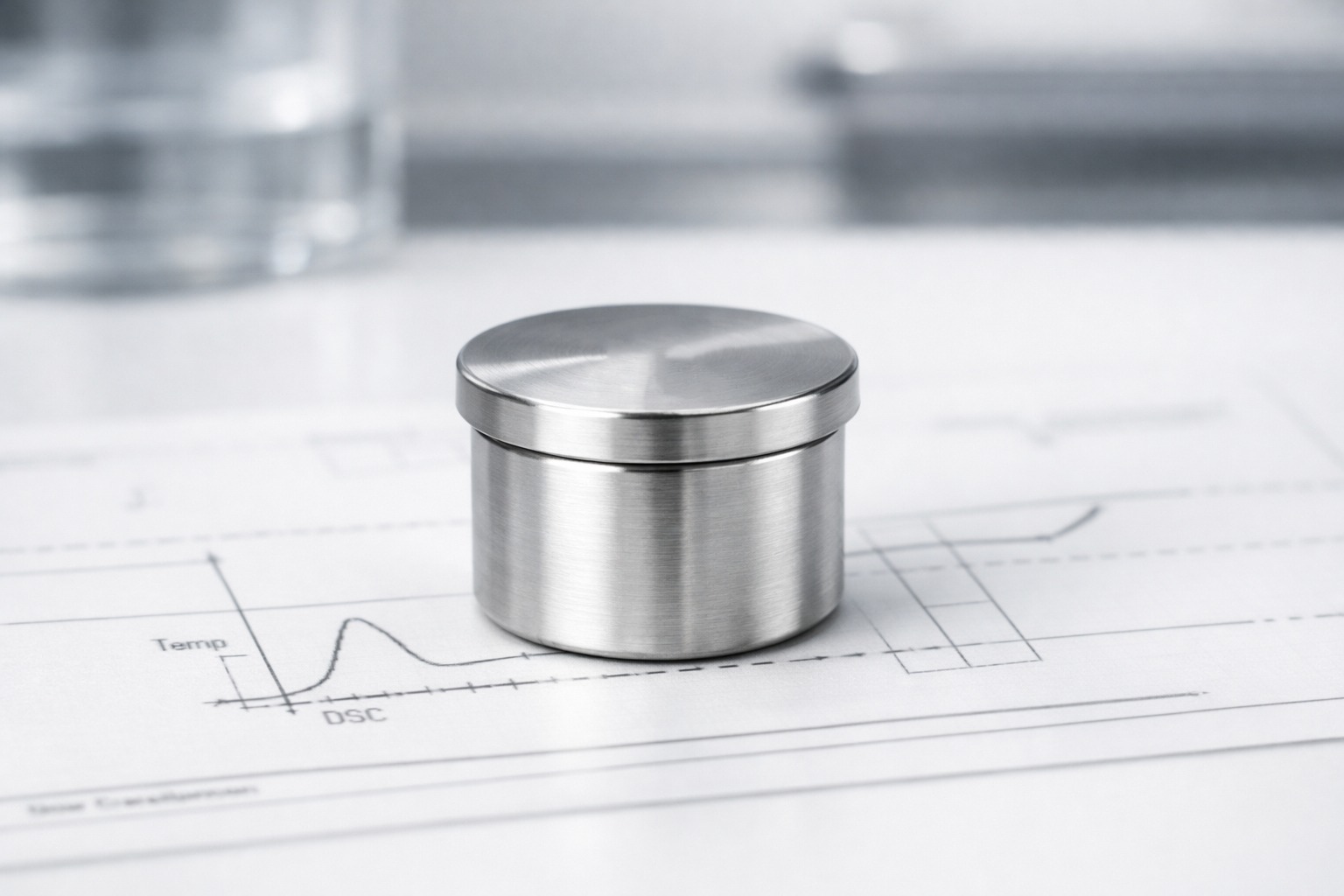
Many labs focus only on their instrument settings and overlook the DSC pan selection process. I learned early that a simple pan mismatch can mean hours of lost work and unreliable data. Here, I want to show the main types of DSC sample pans and how to pair them with your experiment’s demands, drawing on both solid evidence and practical lab tips from my experience.
High-temperature work pushes pans to their limits. It can challenge both safety and data stability.
For high-temperature DSC, choose pans made from platinum, ceramic, or high-purity aluminum. These materials resist deformation and keep your results intact up to 1600°C.
| Pan Material | Max Temp (°C) | Typical Use | Cost Factor | Notes |
|---|---|---|---|---|
| Aluminum | Up to 600 | General-purpose for most DSC | Low | Good for routine testing, limited at high temp |
| Platinum | Up to 1600 | Ceramics, metals, advanced research | High | Best for high temp, high price, reusable |
| Ceramic | Up to 1500 | Oxidation-proof, inert sample analysis | Medium | Resists corrosion and works for harsh samples |
I discovered that not all aluminum pans are the same. Some are rated only for 350°C. Using pans above their limit can cause melting or sample loss. Platinum pans cost more, but can be used repeatedly and keep shape under extreme testing. Ceramics are excellent for oxidative environments, where oxidation of metals causes issues. For most labs, starting with high-purity aluminum is enough unless you routinely run samples above 600°C. Selecting the right material (consider the melting point of your pan) makes the difference between repeatable, safe results and failed runs.
Volatile samples can quickly escape, make a mess, and ruin testing results without the right approach.
For volatile materials, select DSC pans with secure sealing, such as crimped, O-ring, or hermetic pans. These prevent loss or cross-contamination during heating.
| Pan Type | Closure | Best For | Drawback | Extra Feature |
|---|---|---|---|---|
| Standard (Open) Pan | None | Stable, non-volatile samples | No protection against vapor loss | Easy sample loading |
| Crimped Pan | Mechanical crimp | Liquids, low volatility solids | Not for high pressures | Basic vapor protection |
| Hermetic Pan | Sealed with ring | Volatile, sensitive samples | Not suitable for venting | Best seal with O-ring |
| Vented Pan | Designed vent hole | Samples that decompose/gas out | Not for all volatiles | Controls pressure buildup |
When I first worked with volatile solvents, I saw how fast a poorly sealed pan lost sample and led to odd heat flow results. Hermetic sealing ensures that nothing escapes even at high ramp rates. For persistent leaks or high pressure, special vented or O-ring pans help to contain and direct any evolved gases. Some labs use pans with specific vent sizes to analyze both volatility and decomposition without risk of sample explosion (source).
Pharmaceutical testing often needs strict contamination control and precise thermal measurement.
In pharmaceutical labs, use low-background, inert, and certified-clean DSC pans to prevent contamination and ensure accurate results for sensitive drug samples.
| Material | Chemical Inertness | Clean Room Ready | Background Signal | Use Case Example |
|---|---|---|---|---|
| PFA/PTFE | Excellent | Yes | Very Low | API, excipient screening |
| Aluminum | Good | Yes (pre-cleaned) | Low | Dissolution, melting studies |
| Gold-Coated | Top | Yes | Minimal | Trace impurity analysis |
A strict approach is needed when pans come into contact with active pharmaceutical ingredients (API). In my case, even residue from a previous test altered the DSC baseline, so I now use certified-clean, single-use pans for crucial stages. Modern PFA and gold-coated types minimize any interaction, which helps keep every reading reliable. Most regulatory environments expect data proven on inert surfaces to pass quality control checks (USP guidelines).
Food analysis often covers unique sample types, from fats to hydration-sensitive powders.
For food testing, prioritize pans with non-reactive coatings, high precision lids, and designs that prevent cross-contamination. These features suit delicate and oily samples.
| Feature | Why Important | Food Sample Type | Recommended Pan Type |
|---|---|---|---|
| Non-stick Coating | Stops food residue buildup | Fats, butters | PTFE-lined pan |
| Precision Lid | Stops sample evaporation | Dairy, high moisture | Hermetically sealed |
| Inert atmosphere capability | Avoids oxidation | Nuts, oils | Inert gas compatible pan |
| Disposable Design | Prevents contamination | Multiple food types | Single-use aluminum pan |
While studying melting points in chocolate, I found trace contamination from previous samples altered the thermal curve. Now, I pick PTFE or single-use pans for all refined food work to keep every run clean. For high-moisture foods, using precise lids that lock in water stops errors due to evaporation. Some modern DSC systems also let you use pans made to withstand an inert gas purge for total control over oxidation.


C082.Wangdefu International Building, Furong, Changsha, Hunan, China


+86-19907415020