



SHOPPING CART
Your cart is empty.
shop now
Your cart is empty.
shop now
Every lab worker knows the frustration of unreliable results from a DSC. Pan problems waste time and cause doubts in your measurements.
You can solve common DSC sample pan issues by checking for fit, keeping conditions clean, and following careful calibration steps with pans matched to your DSC model.
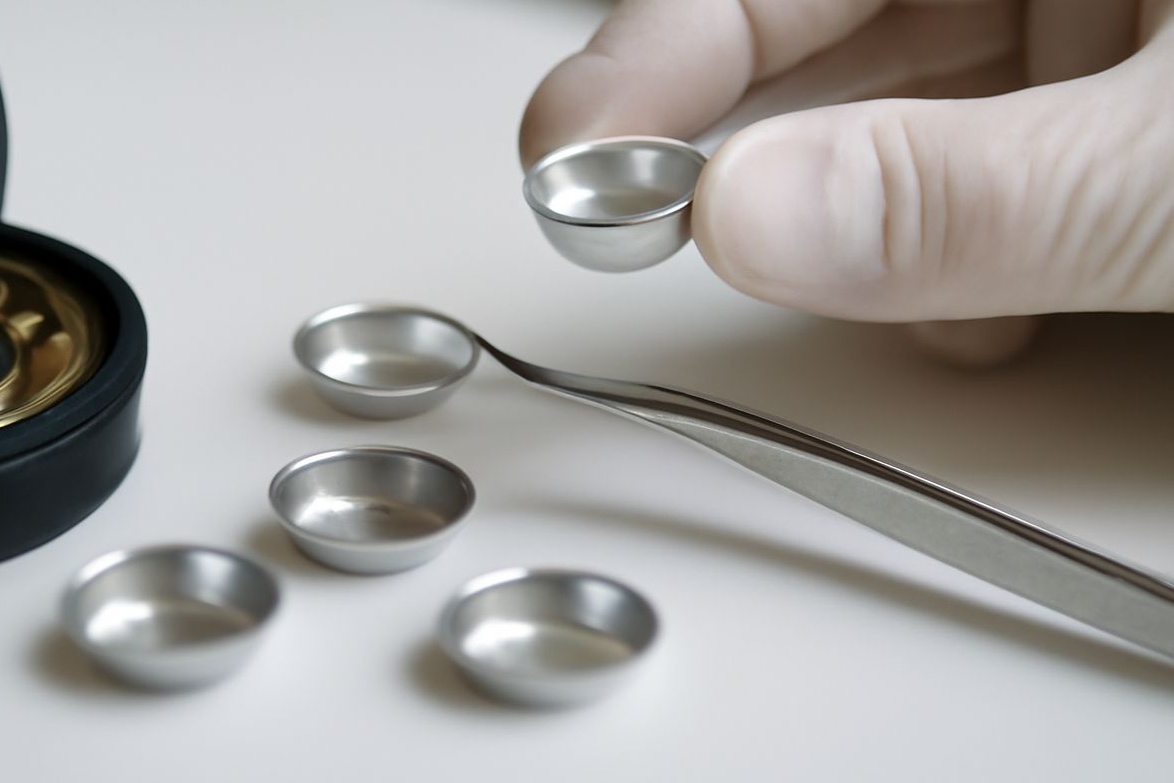
Many engineers spend hours repeating failed tests caused by the smallest pan mistake. Simple checks and choices can save you days and give confidence in your results from the start.
Getting wrong baselines or unexpected peaks can ruin your confidence in the thermal analysis process. It makes troubleshooting stressful for the entire project team.
Measurement errors often come from wrong pan material, poor sealing, improper loading, or a pan that does not match your instrument specifications.
| Error Source | Root Cause | How to Fix |
|---|---|---|
| Wrong Material | Pans not made of correct thermal conductivity metal | Always buy pans made for DSC from known sources |
| Poor Sealing | Lid does not seal, leading to sample loss or vapor leaks | Use recommended crimpers for tight, consistent seal |
| Pan Overloading | Too much sample causes heat transfer issues | Stick to manufacturer’s recommended sample weights |
| Mismatched Fit | Pan offset or loose in sample holder | Match pan size and profile to DSC brand/model chart |
| Surface Contamination | Handling or reused pans introduce residue | Always use fresh, clean pans; avoid tools that scratch |
I often find that fixing basic choices rapidly eliminates data variation. Using pans matched to your DSC system and following correct sealing steps almost always balances the baseline. A 2023 industry survey by confirms wrong sample size and poor pan fit are leading causes of measurement issues. Keep it simple and let the equipment do its job.
Cleaning sample holders and avoiding dust becomes critical once you spot unexplained peaks. Contaminated pans make it impossible to trust your data.
You can avoid contamination by using new pans each time, wearing clean gloves, and storing pans in sealed containers to keep out dust and moisture.
| Contamination Source | Effect on Results | Prevention Steps |
|---|---|---|
| Previous Samples | Carryover or chemical reaction with new sample | Always use fresh pans; never reuse for sensitive tests |
| Handling Residue | Skin oil or debris causes unwanted signals | Wear gloves; use soft clean tweezers only |
| Ambient Dust | Solid residues or airborne moisture contaminate sample | Store pans in original packaging, avoid open bench exposure |
| Improper Storage | Corrosion, oxidation or adsorption on pan surface | Keep containers dry and tightly closed |
| Tool Scratches | Surface energy change, changes baseline | Use proper loading tools; avoid sharp edges |
I saw large differences in measured melting point when reused pans picked up oxidation from cleaning with rough brushes. According to peer-reviewed data in the Thin Solid Films journal, even a slight residue shifts DSC curves. Always open pan packs only when ready, use dry hands or powder-free gloves, and discard pans if they show any surface mark.
An incorrect fit often leads to failed runs and sometimes damages sensors. These losses add up, especially for labs with high sample numbers.
Only use pans whose size, diameter, and depth match your DSC sample tray exactly. Always check compatibility with the model chart before each order.
| Fit Issue | Symptoms | How to Solve |
|---|---|---|
| Too Loose | Pan rattles, uneven contact, low signal | Use manufacturer-matched pans by instrument |
| Too Tight | Pan gets stuck or bends on loading | Order pans with correct diameter/tolerance |
| Poor Alignment | Sensor misses critical contact points | Verify pan height and base match spec |
| Non-OEM Shape | Automation or robots fail to load pans | Consult pan model codes before procurement |
| Incorrect Material | Trigger errors in auto-recognition | Refer to vendor compatibility tables |
From my own DSC work, even a pan that is just 0.05mm off can fail automated loading. Leading brands and technical sites like REDTHERMO and sample holder guides often publish detailed fit information. Measuring your tray and comparing it with pan spec sheets prevents wasted orders. Send a clear request with your equipment brand and model before confirming a new supplier.
Poor calibration gives unstable baseline and shifts in thermogram peaks. This affects your entire series of results and the trust others place in your data.
You can get optimal calibration by selecting certified pans, using reference materials, and repeating the standard process for every batch and equipment change.
| Calibration Step | Best Practice | Supporting Resources |
|---|---|---|
| Certified Pan | Order from vendors who provide ISO 17025 compliance or equivalent | Check certification papers for pan material |
| Thermal Reference | Always run calibration sample (such as indium or zinc) | Compare with published melting points |
| Identical Pans | Use same pan type for all calibration and sample runs | Guarantees baseline stability |
| Repeat Calibration | Recalibrate after changing batch, brand, or machine part | Follow manufacturer calibration guidebooks |
| Record Results | Keep log of each calibration, including pan lot | Use a lab notebook or digital tracking |
I follow a fixed schedule, using certified pans and known standards every quarter. A paper in ACS Omega found that calibration drift drops sharply when using proper, tracked pan lots. Many labs now require digital scans of pan batch numbers for every calibration cycle to meet audit standards. Proper practice here saves you days of reanalysis after unexpected errors.


C082.Wangdefu International Building, Furong, Changsha, Hunan, China


+86-19907415020