



SHOPPING CART
Your cart is empty.
shop now
Your cart is empty.
shop now
Any mistake in the technical specs of a DTA sample container can mean wasted tests or inaccurate conclusions. Performance and reliability always start with precision manufacturing.
Sample containers for Differential Thermal Analysis (DTA) must meet exact size, shape, material, and temperature specifications to ensure consistent research data. Proper tolerances and composition provide confidence in every result.
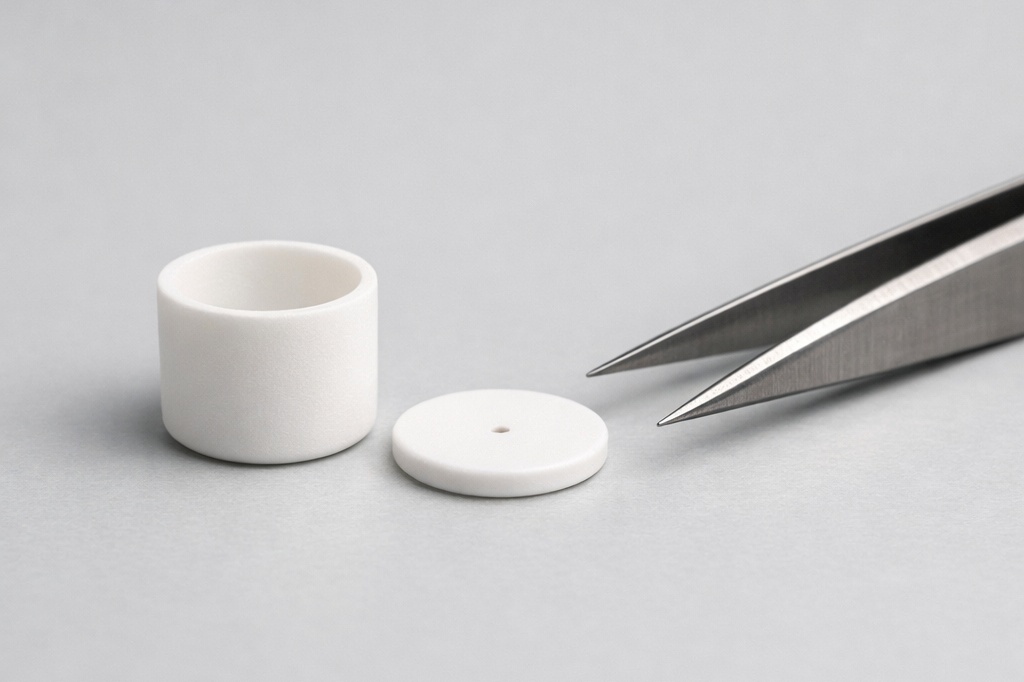
I always check that each batch of containers meets tolerance and thermal resistance needs. This simple step eliminates many common headaches in thermal analysis labs and keeps the data trustworthy.
Sample containers must fit exactly in the instrument and work with automated or manual handling systems. Standard sizing means no lost samples or off-center runs.
DTA sample containers usually follow industry norms for diameter, height, and wall thickness. Uniform shape enables repeatable heating and stable sample location, which is critical for trusted measurements (Differential Thermal Analysis).
| Specification | Typical Range | Importance | Application |
|---|---|---|---|
| Outer diameter | 5–8 mm | Instrument fit, heat contact | Standard DTA holders |
| Height/depth | 2–6 mm | Holds full sample | Surface vs. bulk samples |
| Wall thickness | 0.1–0.3 mm | Thermal conduction | Fast response time |
| Shape type | Cylindrical, pan, crucible | Uniform heating | Various DTA models |
The wrong material can cause melting, contamination, or bad sensitivity. The right choice protects your lab and guarantees measurement reliability across temperatures.
Platinum, aluminum, and ceramic are leading materials for DTA containers. Platinum gives unmatched purity and heat resistance. Aluminum supports affordable routine work. Ceramics handle harsh chemistries well. Selection should match your sample and test environment (Platinum).
| Material | Thermal Conductivity | Max Working Temp (°C) | Reactivity | Best Use |
|---|---|---|---|---|
| Platinum | High | 1600 | Inert | High-temp, sensitive |
| Aluminum | Very high | 630 | Low to moderate | Routine DTA, organics |
| Ceramic | Moderate | 1700 | Low | Aggressive samples |
Not every container works at every temperature. Using a pan above its limit can risk tests, samples, and your whole instrument.
DTA sample containers are designed and tested to survive their maximum rated temperatures. Platinum containers lead at high heat. Quality aluminum pans work for standard organic tests. Ceramics are chosen for high or unusual temperature conditions (thermal analysis).
| Material Type | Max Use Temp (°C) | Failure Mode | Key Use Case |
|---|---|---|---|
| Platinum | 1600 | No melt/deform | Pharma, electronics |
| Aluminum | 630 | Melting, loss of shape | Routine, food, organic |
| Ceramic | 1700 | May crack, but does not melt | Batteries, chemicals |
Precision tolerance means keeping dimensions as close as possible to spec. Tight tolerance matters more when test repeatability and automation are part of the workflow.
Low tolerance on size, thickness, and mass ensures all DTA pans sit flat, seal right, and deliver even heat. Good control lets researchers compare old and new data without error (engineering tolerance).
| Tolerance Spec | Recommended Value | Why It Matters | Consequence if Missed |
|---|---|---|---|
| Diameter | ±0.01 mm | Instrument fit, heat flow | Loose fit, skewed data |
| Height | ±0.02 mm | Volume, consistent mass | Wrong sample depth |
| Thickness | ±0.005 mm | Steady response | Baseline drift |
| Weight | ±0.1% | Stable mass balance | Long-term drift |


C082.Wangdefu International Building, Furong, Changsha, Hunan, China


+86-19907415020