



SHOPPING CART
Your cart is empty.
shop now
Your cart is empty.
shop now
Improving the detail and reliability of thermal analysis requires more than standard methods. Correctly applying DSC crucibles to your specific sample type always shapes better scientific outcomes.
Tailoring DSC crucible use to polymers, food, environmental, or advanced materials testing maximizes both accuracy and efficiency for each unique research or quality control challenge.
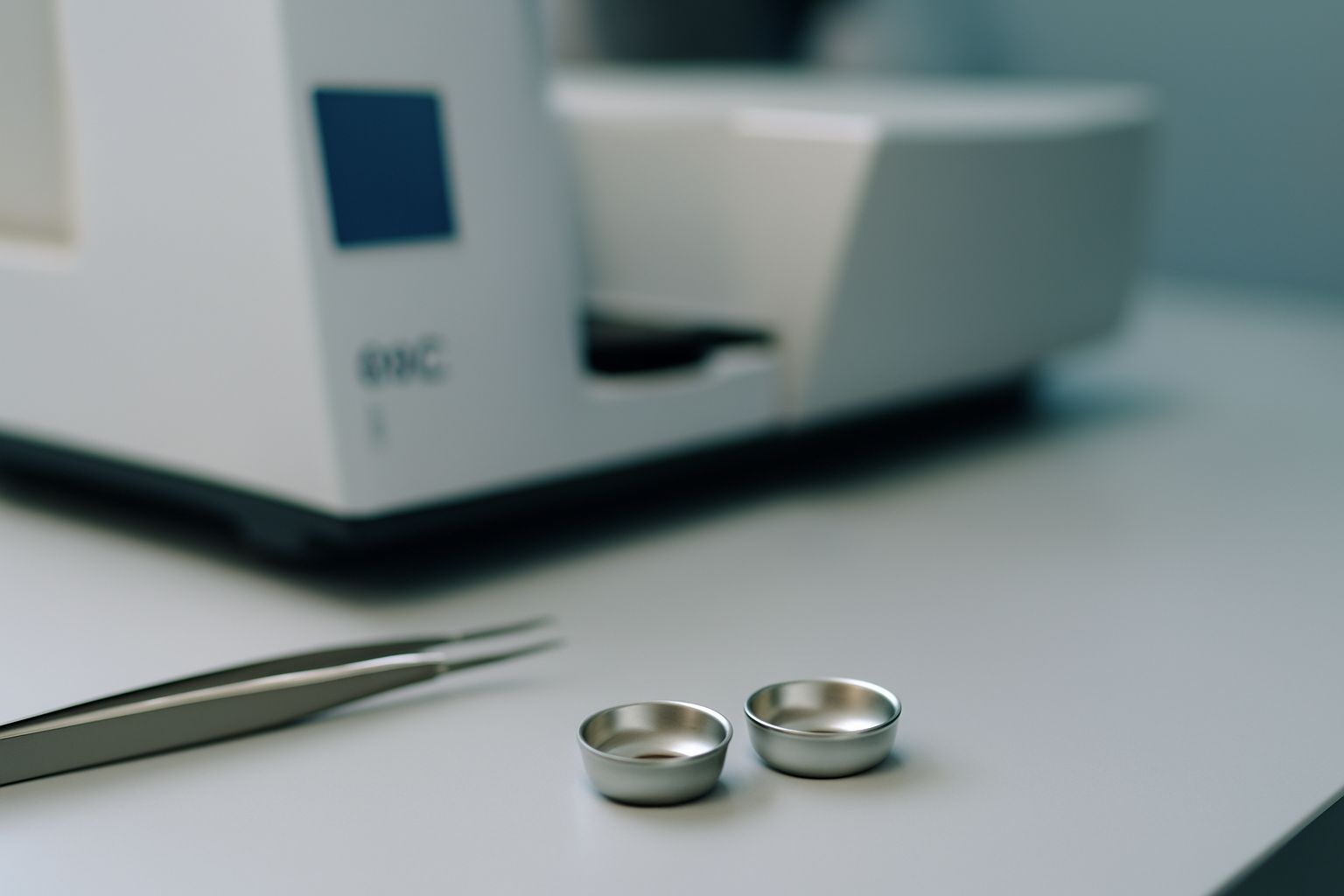
I have supported research and industry teams in optimizing test protocols and sample prep for years. Adapting the pan type, loading, and cleaning for each scenario reduces problems and improves result confidence every time.
Polymers often present challenges like incomplete melting or sticky residues. Choosing the correct crucible is key for reproducible results in DSC scans.
Use aluminum or platinum crucibles with vented or standard lids for most polymers, ensuring proper sample mass and sealing to capture glass transition and melting points accurately.
| Practice | Action Detail | Reference |
|---|---|---|
| Material Selection | Use 99.99% aluminum for most thermal cycles | Polymer science |
| Sample Size | 10–20 mg for standard QA, lower for R&D sensitivity | Lab method validation |
| Lid Choice | Standard for routine tests, vented for volatile blends | Instrumentation supplier guides |
| Baseline Checks | Run water or known polymer reference before series | QA SOP protocols |
I often recheck sample weights between batches and use a lower temperature ramp to stop "overshoot" in glass transition testing. Following a set checklist gives me confidence in polymer research and early product testing.
Food samples can be complex—high in moisture, oils, or active enzymes. Accurate DSC readings rely on minimizing evaporation and handling contamination risks.
Hermetic or crimped aluminum crucibles are best for food tests, especially when measuring fat content or water loss. Rapid sample loading and lid application preserve volatile components.
| Food Testing Practice | Key Details | Reference |
|---|---|---|
| Pan Type | Hermetic for moisture, vented if only fats are tested | Food science |
| Sample Handling | Quick weigh and seal, keep moisture loss to a minimum | Method SOP for perishables |
| Baseline | Run an empty pan cycle to correct for moisture in the device | Instrument user guide |
| Cleaning Routines | Thoroughly clean with alcohol or detergent as needed | Lab QA process |
I make sure to cool or freeze samples before pan loading if possible. This slows evaporation and keeps more analyte in the pan for analysis—a tip that's saved my results on more than one occasion.
Environmental analyses often deal with dirty, variable, or chemically aggressive samples. The right pan helps avoid corrosion, false positives, or baseline drift in repeated tests.
Alumina or platinum crucibles offer the greatest chemical resistance and temperature stability for soil, airborne particulate, and industrial residue analysis.
| Scenario | Best Crucible/Method | Reference |
|---|---|---|
| Soil Ash Content | Alumina, use high temp cycles | Environmental science |
| Industrial Dust | Platinum, for aggressive acids or bases | Industrial hygiene guides |
| Water Pollutants | Standard pans for quick scans, switch to ceramics for detailed evaluation | SOP for regulatory testing |
| Multiple Batches | Rotate pan use to avoid cross-contamination | Lab QA logs |
In multiparameter screening runs, I track all cleaning steps and rotate pans for each sample type. Catching corrosion early with visual checks boosts reliability through long field campaigns.
Developing new composites, alloys, or smart materials needs controlled, clean, and highly reproducible thermal data. Choosing and preparing the right crucibles supports innovation at every stage.
For advanced R&D, always use the highest purity and best-matched pan material. Document every lot and run blanks with reference materials for calibration.
| Material Goal | Crucible Strategy | Reference/Advice |
|---|---|---|
| New Alloy Testing | Platinum, avoid contamination, record all loads | Alloy research |
| Composite Polymers | Start with aluminum, move to ceramics for temperature extremes | Polymer research protocols |
| Battery Materials | Switch between hermetic and vented, dependent on volatility | Battery industry standards |
| Nanomaterials/Smart Materials | Gold pans for high-purity result needs | Nanomaterial |
Documenting all cleaning, weighing, and pan material for each new project has helped me troubleshoot spikes in data and speed up progress—even as methods get more complex and sample quantities shrink.
Applying scenario-driven best practices with DSC crucibles ensures robust, reproducible analysis across polymer, food, environmental, and advanced material research—raising overall lab performance on every project.
Contact Us: info@redthermo.com

C082.Wangdefu International Building, Furong, Changsha, Hunan, China


+86-19907415020