



SHOPPING CART
Your cart is empty.
shop now
Your cart is empty.
shop now
Many students face trial and error when starting DSC analysis, leading to frustration and wasted material. Clear guidance can help learners gain confidence in the lab.
Aluminum pans are a go-to for student DSC use because they are reliable, cost-effective, and deliver steady thermal results crucial for lab exercises and coursework.
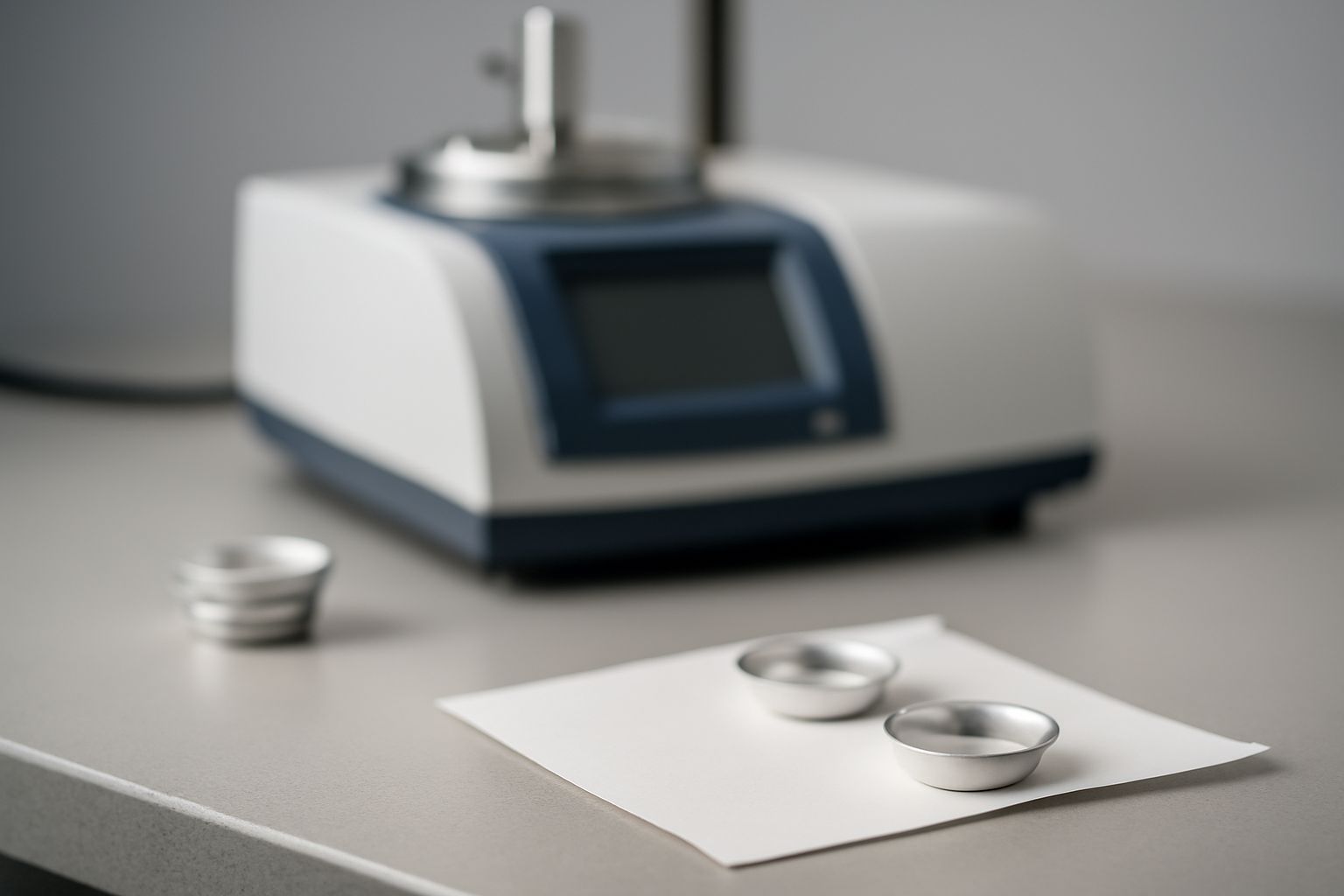
I know from experience that a few small adjustments in how I use aluminum pans changed my entire DSC learning process. These insights helped me save time, cut repeat mistakes, and produce better test data than ever before.
Many starting students worry about breaking the budget or getting messy, inconsistent results. The right tools can make the entire process straightforward and predictable.
Aluminum pans top the list for students because they cost less, offer strong heat transfer, and work with most DSC setups. That allows students to practice without fear of expensive errors.
| Feature | How It Helps Students | Related Concepts |
|---|---|---|
| Low Cost | Students can afford multiple test runs for practice or exploring new samples. | Differential Scanning Calorimetry |
| Good Thermal Conductivity | Uniform heating allows samples to reach stable temperatures, reducing data errors. | Thermal conductivity |
| Compatible Sizes | Pans fit most common DSC brands and models, from lab teaching tools to advanced systems. | Instrument compatibility |
| Reliable Sealing | Standard lids and sealing options cut the risk of leaks or loss of volatile samples. | Sealant |
When I started using aluminum pans, I quickly learned how much easier they made repeated training and experiments. That saved me time and boosted my confidence in handling real thermal analysis equipment. Major textbooks and DSC guides stress these points.
As students move to advanced coursework, mistakes in pan choice, preparation, or sample loading can waste resources quickly. Tight lab deadlines add extra pressure.
To handle advanced DSC work, students should match pan specs with complex samples, use precise weighing, and select the right sealing method. This improves accuracy even with custom or small batch samples.
| Key Step | Student Action | Resulting Benefit |
|---|---|---|
| Selecting Correct Pan Type | Pick specific pans (e.g. hermetic for wet or volatile samples, open for polymers). | Reduces sample loss and helps observe endothermic or exothermic shifts. |
| Sample Mass Precision | Use an analytical balance for weighing each load, usually 3-10 mg per test. | Makes sure data compares across runs and with literature. |
| Sealing Technique | Use a sealing press or manual crimper evenly, checking for lid flatness. | Stable pan seal prevents moisture or sample escape. |
| Brand Compatibility Check | Match pans to brand specifics from guides or manufacturer tables. Common DSC names include TA Instruments, METTLER, and PerkinElmer. | Prevents pan jams and equipment errors. |
Once I changed to this careful, step-wise method, my senior DSC labs became smoother, and I produced results trusted by my peers and instructors. The need for correct preparation is widely noted in industry.
Many students feel lost when searching for reliable guides, video tutorials, or community advice on DSC pan use. I have faced the same information gap myself.
Students can master aluminum pans faster by using online courses, manufacturer guides, research journals, and lab-specific video content. Peer discussion groups also offer helpful, real-world problem solving.
| Resource Type | How It Helps | Example or Link |
|---|---|---|
| Online Video Tutorials | Visual step-by-step demos cover sample loading, pan sealing, and error checks. | YouTube Lab Tutorial |
| University Lab Manuals | Give institution-approved methods for handling and prepping pans. Many list standard errors and quick fixes. | University resources |
| Manufacturer Guidelines | Show specific compatibility notes for each brand/model. Can find replacement parts and technical specs. | METTLER Support |
| Research Journals | Scholarly articles give in-depth explorations of thermoanalytical techniques and error reduction. | Journal archives |
| Student Forums & Groups | Provide community answers, troubleshooting from peers, and shared pan tips. | Reddit, LinkedIn |
Using at least two of these resources made my own DSC practice much smoother and helped me help others in my class. Consistently consulting these references is suggested by educators and lab supervisors.
Even though pan designs seem simple, students have started to improve pan usage, sealing, and recycling with their own research and experiments.
Students can innovate by testing new aluminum pan coatings, designing reusable pans, or optimizing loading methods to get sharper results and reduce waste.
| Innovation Area | Student-Created Idea | Potential Outcome |
|---|---|---|
| Surface Treatment | Apply a thin oxide or gold coating for less reaction with test samples. | Low interference, improved compatibility for sensitive materials. |
| Reuse and Recycling | Design protocols for cleaning and repeat use of pans, especially in teaching labs. | Less waste, lower ongoing lab costs. |
| Precision Loading Jigs | Develop simple, 3D-printed pan holders or measurement aids for even better sample placement. | Greater repeatability, fewer sample losses. |
| DSC Data Apps | Build simple software to flag faulty data when pan errors are detected. | Faster test cycles, more teaching moments in class. |
Some university labs now encourage student-led projects to redesign or repurpose aluminum pans. I believe these open opportunities help students build practical research skills and spark new ideas in practical thermal analysis.


C082.Wangdefu International Building, Furong, Changsha, Hunan, China


+86-19907415020