



SHOPPING CART
Your cart is empty.
shop now
Your cart is empty.
shop now
Using the wrong DSC pan makes thermal analysis results unreliable or even invalid. Selecting pans tailored to your work prevents costly test errors and wasted time.
For dependable results, always match your DSC pan to your application. The right choice of pan—by material, sealing, and design—ensures accurate heat flow, minimal sample loss, and reproducible measurements.
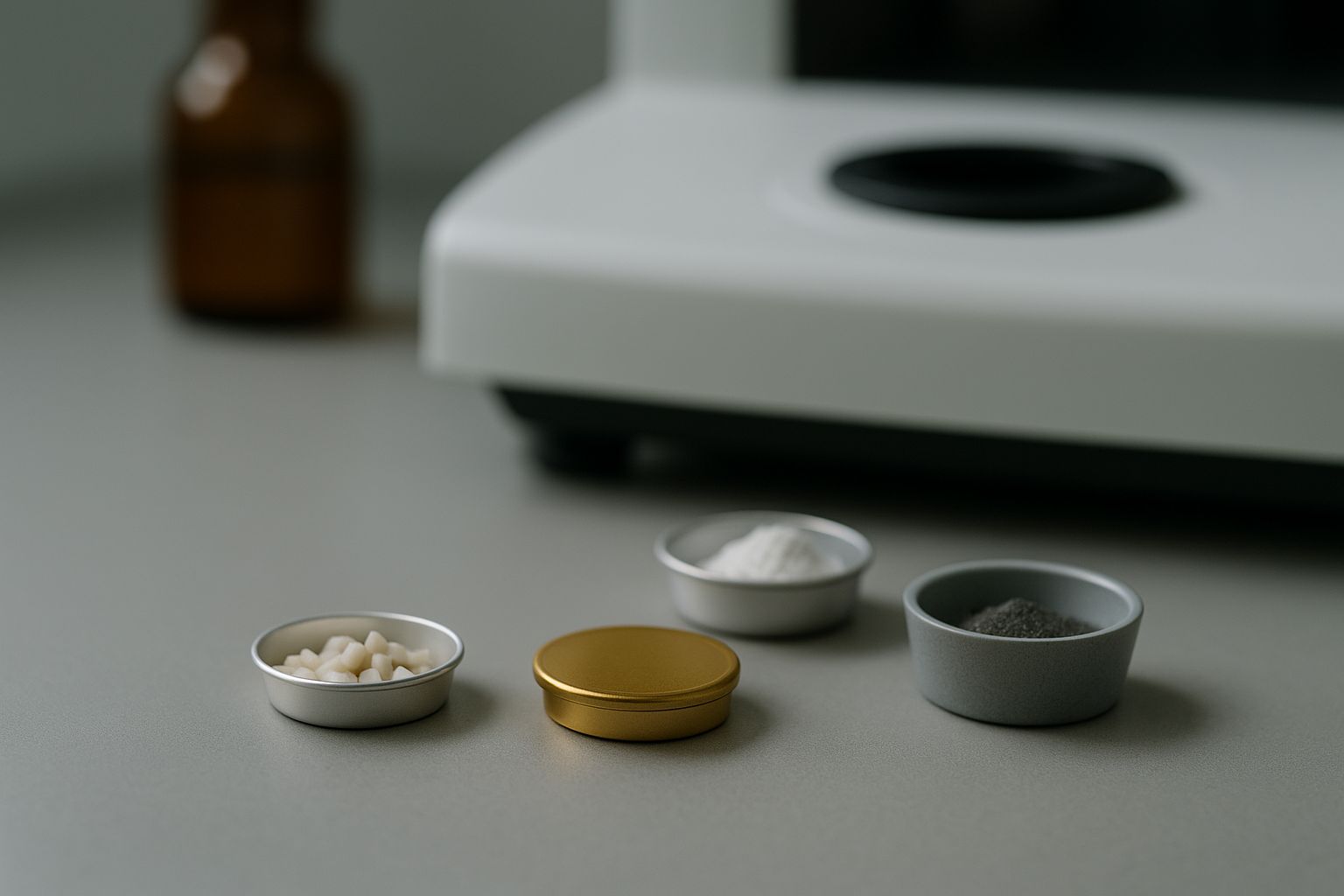
When I first worked in the lab, I often picked generic pans for all my measurements. Over time, I learned that each test type benefits from a specific pan. Here is my practical guide to DSC pan selection for major laboratory scenarios.
Ordinary pans can distort heat flow in polymer tests and hide true glass transition points. Getting precise curves depends on using the proper pan.
For most polymers, standard aluminum DSC pans offer reliable thermal contact and responsiveness. Use high-purity, flat-bottomed pans for best results.
| Polymer Test | Recommended Pan | Why This Pan? | Reference |
|---|---|---|---|
| Glass transition (Tg) | Standard aluminum, hermetic or non-hermetic | Ensures consistent heat transfer, limits sample loss | Polymer characterization |
| Melting/crystallization | Aluminum, lid selected for volatiles | High conductivity supports clear, distinct peaks | DSC |
| Thermal stability | Aluminum with vented or sealed lid | Adapts to evolving gases, maintains safety | ASTM D3418 |
I used to struggle with poor baseline and sloping curves until I switched to high-purity pans aligned to my polymer sample amount. Always check that the pan fits the instrument sensor cavity and is free of contamination. When in doubt, use fresh pans for each run. Fine-tuning your pan choice will show in sharper results and less test repeat.
Moisture and air can change sensitive pharmaceutical results. I learned firsthand that open pans risk sample loss and contamination in drug analysis.
Use hermetic DSC pans for pharmaceutical studies. These pans lock in moisture, prevent oxidation, and limit contamination, leading to accurate and reliable measurements.
| Pharmaceutical Application | Best DSC Pan Type | Reason | Reference |
|---|---|---|---|
| Hydration/Dehydration | Hermetic pans, aluminum or gold | Trap moisture, avoid evaporation | Pharmaceutical analysis |
| Drug melting point | Hermetic, press-sealed | Blocks contaminants, maintains pressure balance | Journal Study |
| Stability testing | Hermetic, gold or Teflon pans | Withstands reactive conditions | USP Reference |
In my experience, switching to hermetic pans reduced unexplained variability and improved FDA-compliant reporting. These pans are disposable for critical testing but can be reused for less sensitive measurements if properly cleaned. The right seal makes a clear difference in moisture and heat-sensitive drugs.
Aluminum pans melt or deform above 660°C. High temperatures demand specialty pans for accurate, safe results. I once lost a valuable sample this way.
Choose platinum or ceramic DSC pans for measurements above aluminum’s melting point. These pans endure extreme heat with minimal interaction with samples.
| Measurement Type | Pan Material | Heat Limit | Reference |
|---|---|---|---|
| Normal polymer testing | Aluminum | Up to 600°C | Aluminium |
| High-temperature ceramics/alloys | Platinum | Up to 1600°C | Platinum |
| Refractory/non-reactive | Boron nitride, alumina pans | Up to 2000°C | Refractory ceramics |
For metals and ceramics, I always trust platinum pans, even if they cost more. The durability and precision at high temperatures are worth it. Check the documentation for each instrument, and confirm pan tolerance before starting. Some labs add a protective liner for very reactive samples as well.
Volatile samples evaporate or react with air during heating. Open pans expose material to loss, skewing test outcomes.
Hermetic DSC pans seal your sample tightly. They prevent evaporation and protect the test from external gases for volatile and moisture-sensitive samples.
| Sample Type | Pan Feature | Purpose | Reference |
|---|---|---|---|
| Organic solvents | Hermetic seal, O-ring, or crimped | Avoids mass loss, ensures accurate measurement | Hermetic seal |
| Water-rich samples | Hermetic, vapor-tight | Prevents evaporation and condensation | Volatility |
| Reactive liquids | Hermetic with chemical-resistant liner | Stops external gas interference | Analytical chemistry |
I had several failed runs due to evaporation with open pans. After moving to O-ring and press-sealed hermetic pans, my data stabilized for even the most sensitive volatile samples. Always double-check the seal before starting and store sealed pans upright until measurement.
Matching your DSC pan choice to your specific sample and analysis keeps your results clear and minimizes retesting. Choose pans by scenario for the best value in your lab.


C082.Wangdefu International Building, Furong, Changsha, Hunan, China


+86-19907415020