



SHOPPING CART
Your cart is empty.
shop now
Your cart is empty.
shop now
Poor pan selection for your research scenario can result in lost samples, inaccurate heat flow data, or unrepeatable thermal analysis outcomes with XYZ Instrument.
The best DSC pan for each scenario aligns with sample type, temperature needs, and analysis goals. Match pan material and design—like sealed or high-temp pans—to your research setup for reliable and reproducible results.
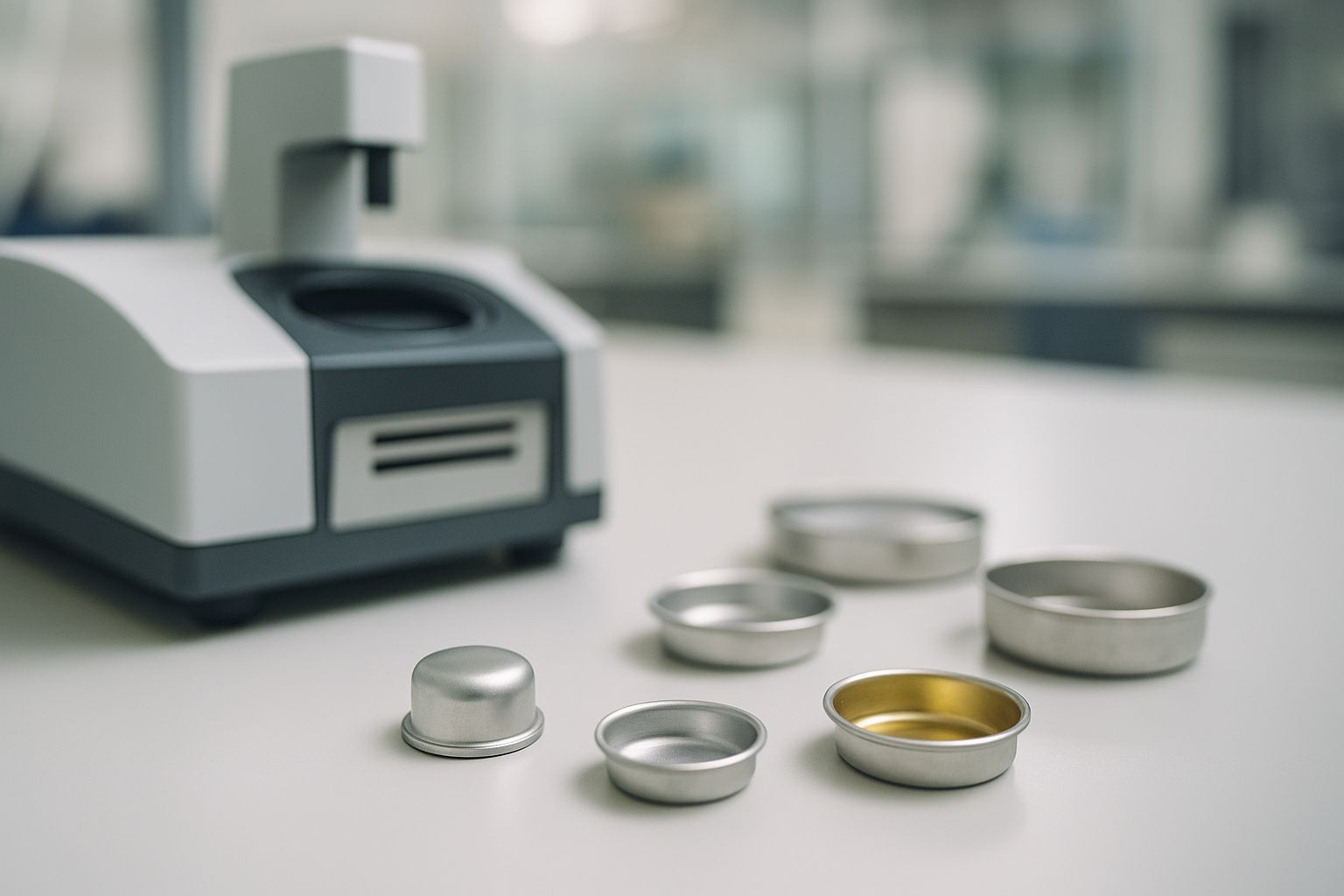
Each time I run a new research project, I start by considering the sample’s special needs and challenge level. The right DSC pan directly impacts the quality and reliability of every set of measurements, so it deserves thoughtful selection. Here are key scenarios and how I approach each one.
Ordinary aluminum pans melt or deform at high temperatures, leaving you with errors and cleanup tasks instead of results.
For high-temperature analysis, always use pans made of platinum or advanced ceramics. These materials resist warping and chemical reaction, supporting accurate DSC readings up to 1600–1700°C without breaking down.
| Pan Material | Max Safe Temp (°C) | Typical Research Use |
|---|---|---|
| 99.99% Aluminum | 600 | General organic samples, polymers (aluminum info) |
| Platinum | 1600 | Glass transitions, metals, and advanced ceramics |
| Alumina (ceramic) | 1700 | Oxidative stability, harsh high-temp conditions (alumina basics) |
High-temp materials prevent shape change, surface reaction, or data drift even in extreme thermal studies. I always use high-temp pans when exceeding routine organic sample ranges, as shown in published lab comparisons.
Volatile samples can escape easily, ruining both mass balance and analysis. Loss through evaporation directly affects the accuracy of any measurement.
Always use hermetically sealed pans or pans with O-rings for volatile samples. These keep the sample contained, block air and moisture, and make accurate DSC curves possible for liquids or outgassing samples.
| Pan Feature | Purpose | When to Choose |
|---|---|---|
| Hermetic seal | Keeps vapor and air out | All volatile, liquid or hygroscopic samples |
| O-ring closure | Offers extra pressure hold, easy opening | Moderate volatility, fast-run protocols |
| Pressure relief vent | Lets slight outgassing escape without rupture | Reactive or pressure-increasing runs |
Pans with these features safeguard data in every volatile sample run. My best DSC data with liquids or solvents come from using sealed pans and tracking any baseline changes due to pressure events.
Pharmaceutical testing is all about purity and compliance. Using the wrong pan can introduce contamination or create background interference in heat flow analysis.
Choose high-purity aluminum or gold pans when testing drugs and APIs. These pans offer inertness and reduce baseline noise, providing clean thermal profiles required for regulatory review and formulation studies.
| Pan Material | Key Property | Research Impact |
|---|---|---|
| High-purity aluminum | Low contamination, excellent thermal response | Reproducible results, minimum signal drift |
| Gold | Fully inert, prevents chemical exchange | Reliable testing for unstable or new drugs |
| Coated pans | Optimized for moisture or reactive chemicals | Best for specialty or custom drug development |
I request batch certificates and run empty pan tests to make sure new pans meet my clean baseline standards. Most pharmaceutical labs log pan lot numbers for every routine and validation study.
Environmental analysis often calls for pans that can handle varied temperatures, complex matrices, and unknown impurities from real-world samples.
DSC pans for environmental testing must be versatile. Use high-purity aluminum for soils or plastics, and ceramic or platinum for unknowns needing high-temperature resistance or inertness against tough sample matrices.
| Test Scenario | Recommended Pan | Reason |
|---|---|---|
| Soil thermal analysis | Aluminum or ceramic (soil test overview) | Balances cost, handles organic & inorganic samples |
| Plastic pollution studies | High-purity aluminum | Standard baseline, repeatable measurement cycle |
| Unknown samples or heavy metals | Platinum or alumina | Inert, high-temp, no interferences |
I always keep a set of reference pans and run a blank with each new matrix. Reports show that matching pan to analysis conditions limits error and increases the value of every environmental test.


C082.Wangdefu International Building, Furong, Changsha, Hunan, China


+86-19907415020