



SHOPPING CART
Your cart is empty.
shop now
Your cart is empty.
shop now
Many labs get stuck with costly errors or bad results after buying the wrong crucibles. Picking universal crucibles for thermal analysis should not be a gamble.
Universal crucibles bring the best results only when their materials and sizes match your analyzer and sample needs. Taking time with selection increases lab performance and testing accuracy.
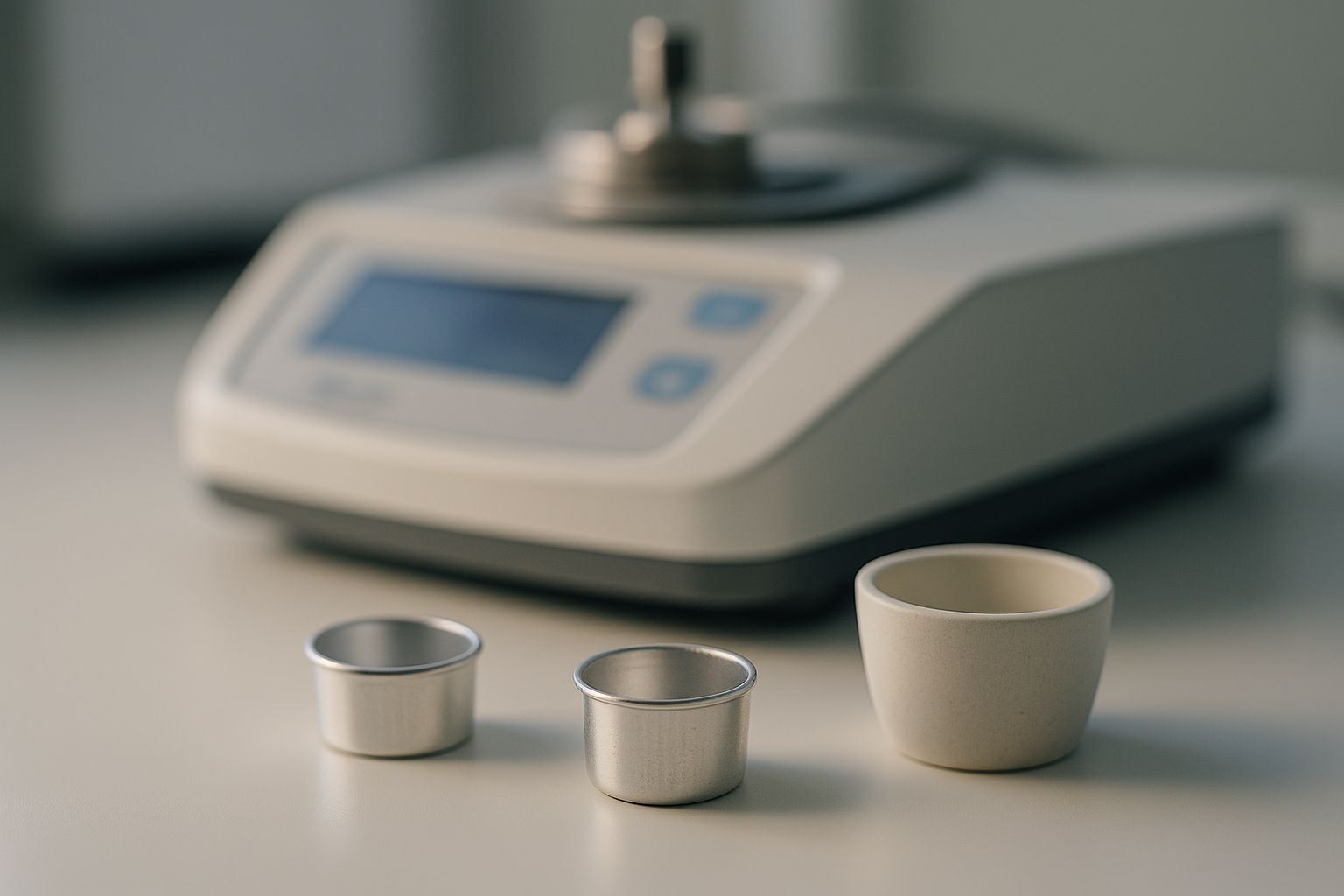
I have seen labs face delays and data errors from simple selection mistakes. The right choice makes work easier at every step.
Some buyers rush without checking the details and end up with pans that compromise data or melt in the test.
Labs should check material, temperature limit, purity, capacity, geometry, and vendor reputation to get the best universal crucible for their workflow.
| Factor | Explanation | Why Important | Resource |
|---|---|---|---|
| Material Composition | Aluminum, platinum, or ceramic | Directly affects compatibility and purity | Crucible Guide |
| Max Temperature | Upper safe limit (e.g., 600°C for Al) | Ensures no melting or warping during use | Melting Point |
| Purity Level | 99.99% for high-accuracy labs | Affects test repeatability | Material Purity |
| Capacity & Size | Volume in µL or mg range | Must fit samples and analyzer | Volume |
| Shape/Geometry | Standardized round, flat-bottom, etc. | Improves thermal contact, easy handling | Standardization |
| Supplier Trust | Check for good service and support | Prevents sourcing issues | Supply Chain |
I always check temperature limits and purity first. Reliable suppliers help avoid mistakes and replacements later.
Not every universal crucible fits all analyzers. Compatibility is the biggest reason labs have failed runs or wrong test data.
To check compatibility, compare crucible dimensions, sealing style, and material with your analyzer or ask the supplier for a fit guarantee.
| Compatibility Check | What To Do | Outcome if Matched | Reference |
|---|---|---|---|
| Diameter and Height | Measure and verify with manual spec | No jams, proper fit every run | Calipers |
| Rim and Lid Type | Confirm sealing matches holder | Prevents leaks and loss | Seal |
| Material Chemistry | Ensure analyzer heating circuits are safe | Protects sensors and wiring | Chemical Compatibility |
| Brand or Model Chart | Check supplier reference table | Easy product picking, less trial and error | Lab Equipment |
| Test Run or Trial Sample | Ask for a few to test before buying bulk | Proves real-world fit | Prototype |
When I switched analyzers, I always used calipers to check pan dimensions and got supplier samples first.
Every lab wants savings, but very low prices often bring poor results, delivery delays, or substandard pans.
The average cost for reliable universal crucibles is between $3 and $18 per unit, depending on material, certification, and batch size.
| Type | Typical Price (each) | For Which Test | Info Link |
|---|---|---|---|
| Aluminum | $3 - $6 | DSC, routine TGA | Aluminum |
| Platinum | $10 - $18 | High-temp TGA, STA | Platinum |
| Ceramic | $6 - $12 | Chemically aggressive tests | Ceramics |
I look at total cost per test when planning orders. Buying reliable aluminum or platinum pans keeps my projects on schedule and protects my samples.
It is easy to find suppliers online, but not all offer quality, traceability, or strong technical service.
Order universal crucibles directly from trusted lab consumables brands, authorized dealers, or sites with full specification sheets and proven supply records.
| Source Type | What to Check | Main Benefit | Resource |
|---|---|---|---|
| Brand Webstores | Look for product codes, dimension charts | Direct support, current stock | REDTHERMO |
| Authorized Distributors | Ask for current certifications | Warranty protection | Distributor |
| Large Lab Marketplaces | Check return policy, reviews | Wider selection, easier comparison | E-commerce |
| Direct Factory Supply | Confirm QC and batch IDs | Lowest cost for volume buys | Manufacturing |
My advice is to order from main producers or trusted factory partners for all large orders. I always check certifications before approval.


C082.Wangdefu International Building, Furong, Changsha, Hunan, China


+86-19907415020