



SHOPPING CART
Your cart is empty.
shop now
Your cart is empty.
shop now
Learning new technology can be confusing and even discouraging. This is true for many when starting with Differential Scanning Calorimetry (DSC) in the lab.
Differential Scanning Calorimetry helps measure materials’ thermal properties by comparing the heat flow needed to increase the temperature of a sample and reference. This makes DSC an essential tool in material science and quality control.
Understanding DSC can help you run better experiments and avoid common test mistakes. I want to share a clear, practical guide so you can handle your first DSC experiment with confidence and accuracy.
Thermal analysis often sounds complex, but DSC is a straightforward and widely used method. It plays a major role in evaluating how heat interacts with solid or liquid materials.
DSC measures the energy required to increase the temperature of a test sample compared to a reference under controlled heating. It finds use in plastics, pharmaceuticals, and metal research.
| Concept | Meaning | Practical Example |
|---|---|---|
| Thermal analysis | Study of material property changes under heat | Track glass transitions in polymers |
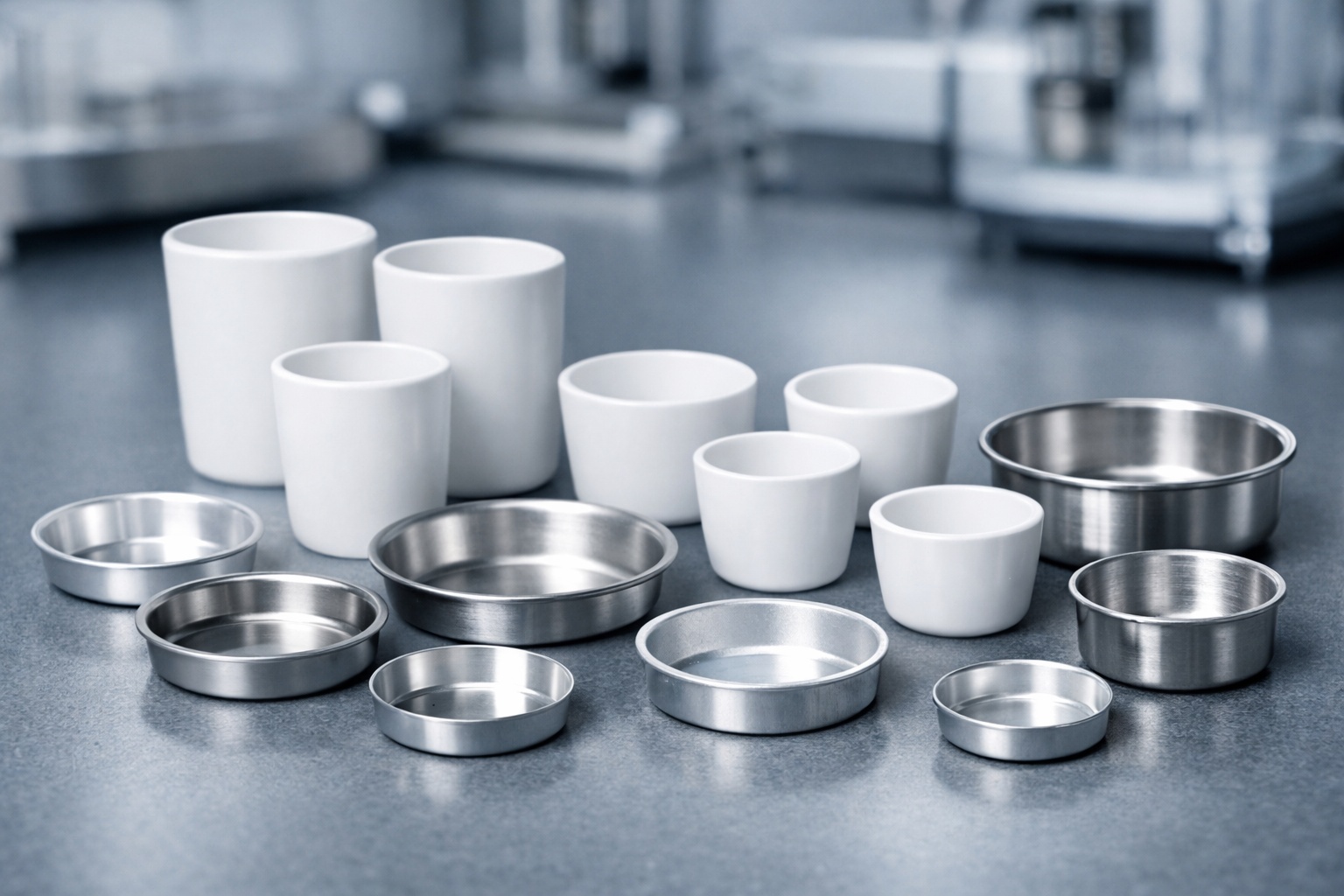
| Sample pan | Container holding the test material | Aluminum pans for plastics, platinum pans for chemicals |
| Reference pan | Container with neutral substance for comparison | Empty or filled with inert material |
| Heat flow | Energy needed to raise temperature | Peaks in DSC curve signal melting or reaction events |
I still remember my first time setting up a DSC run. The simplicity of the hardware surprised me but highlighted the importance of using suitable pans and correct heating profiles. Consistency in these choices defines the quality of your results.
Starting a DSC experiment calls for detailed planning and care. Mistakes in early steps can create confusing or unusable data.
To set up a DSC run, correctly calibrate the instrument, use clean and compatible pans, and prepare your sample following best practices for your material.
| Step | Action | Purpose |
|---|---|---|
| Calibration | Run standard materials (like indium) as per guide | Ensures accurate temperature and heat flow |
| Sample Preparation | Weigh sample, use matching DSC pan | Improves repeatability and limits errors |
| Atmosphere Control | Set gas as required (nitrogen, air) | Prevents unwanted reactions |
| Instrument Settings | Enter rate, start/stop temps | Matches test to sample’s needs (laboratory best practice) |
The first time I calibrated a new device, the results were off until I ran two extra standards. Following each step in the manual gave stable, clean peaks. Clean pans and careful weighing make a big difference in reducing noise and improving test reliability every time.
Even with good equipment, DSC results can be inconsistent if key factors are overlooked. Every detail in preparation and setup can affect test output.
Factors such as heating rate, sample mass, atmospheric control, and pan materials all influence data quality and experiment repeatability.
| Factor | Effect on Results | Tip for Consistency |
|---|---|---|
| Heating Rate | Faster rates can flatten peaks or shift them | Use slower rates for detail, faster for throughput |
| Sample Mass | Too much or too little alters sensitivity | Stick to recommended sample sizes |
| Atmosphere | Wrong gas can cause unwanted reactions | Match gas to sample’s stability (gas type) |
| Pan Material | Mismatch affects heat transfer accuracy | Choose the right pan for sample and temp |
My customers often ask why two labs show different results for the same sample. Usually the cause is in heating rate or atmosphere details. When each protocol follows the same guidelines, results become much more reliable. Science Direct’s review of DSC [2021] highlights sample prep as the single biggest variable.
Reading DSC curves correctly is as important as getting the experiment right. Data can be simple or complex, depending on sample and procedure.
Effective interpretation requires knowing each curve’s meaning—identify transitions like melting, crystallization, or glass changes based on reference heat flow baselines.
| Curve Feature | Possible Event | Interpretation Tip |
|---|---|---|
| Sharp endothermic peak | Melting point reached | Compare to literature standard |
| Broad transition | Glass transition event | Check for midpoint, use known references (glass transition) |
| Multiple peaks | Simultaneous processes or impurity | Validate sample purity, repeat run |
| Flat baseline | No detectable event in temperature range | Increase sensitivity, confirm calibration |
When I first learned to read a DSC curve, I missed the midpoint of glass transition. Later, I checked the reference and found the correct inflection. Comparing your results with trusted publications or online databases is always helpful for beginners.
DSC technology is essential in material science. Knowing the right setup and reading data carefully help you achieve accurate, reliable results from your first experiment onward.
Contact Technical Support – info@redthermo.com

C082.Wangdefu International Building, Furong, Changsha, Hunan, China


+86-19907415020