



SHOPPING CART
Your cart is empty.
shop now
Your cart is empty.
shop now
Many labs struggle to fit off-the-shelf DSC pans to every special experiment. Mismatched pans can lead to real headaches for test accuracy and workflow speed.
You can solve most unique testing needs by adapting your sample pans—whether through customizing, using heat-resistant material, or choosing the right seal. This ensures better data and keeps experiments on track.
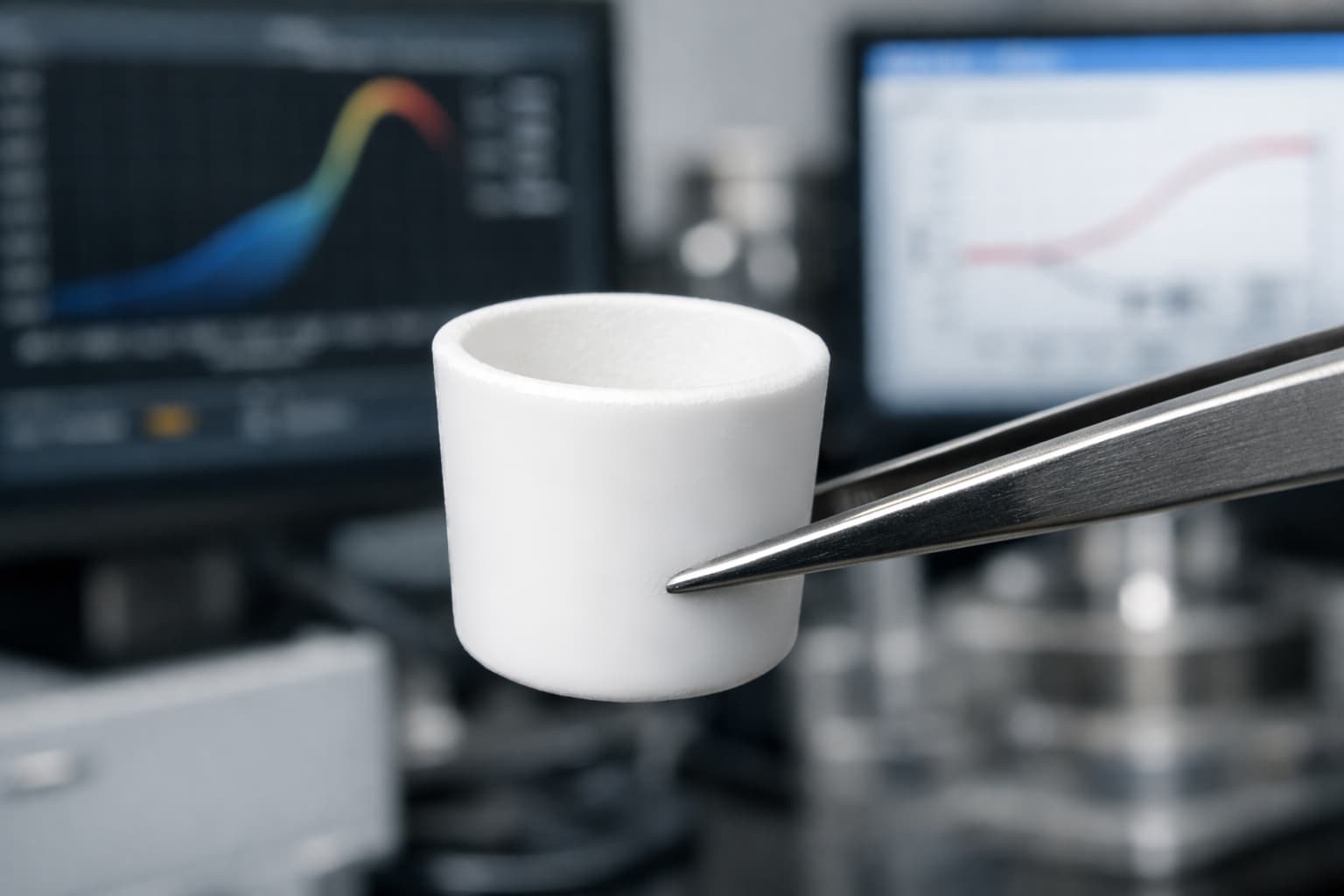
Laboratory testing never runs on a single formula. No matter how standard your process, sometimes your project forces you to adjust. With the right approach to sample pans, you make sure every experiment gets the reliable support it needs. Let’s see how to get the most from your DSC pans in specialized scenarios.
Every now and then, a standard pan just does not work. Maybe it is the sample geometry, or your method needs a different material or seal. If the test demands change, customization makes sense.
Choose custom DSC pans when standard options cannot provide a stable baseline, or when matching your exact sample profile is essential. Custom pans provide a precise fit for any instrument or experiment.
| Reason | Impact in the Lab | Recommended Pan Feature |
|---|---|---|
| Non-standard sample shapes | Unreliable thermal contact causes imprecise results | Custom-welded cavities |
| Special sealing requirements | Sample loss or atmosphere leaks | Custom lids or crimping system |
| Unique material compatibility | Sample reacts with pan or absorbs contaminants | Non-Aluminum materials (e.g., platinum, gold, ceramic) |
| Tight fitting to rare instruments | Pan will not seat properly, skewing test outcome | Dimensions matched to device specification |
Some samples are just too sensitive or valuable to risk with generic hardware. At REDTHERMO, I make sure clients get pans not just made to size, but also tested against their project method. Clients send me sample drawings, physical prototypes, or diagrams, and I handle the match. For many new customers, the difference that custom work brings is clear after one run.
When your research involves high heat—say, above the usual 600°C range for aluminum pans—using the wrong pan risks melting, leaking, or even system damage.
For high-temperature tests, select pans made from materials with melting points higher than your experiment temperature. Popular choices include platinum, alumina, or other engineered alloys.
| Material | Melting Point | When to Use |
|---|---|---|
| Aluminum | 660°C | Routine DSC/TGA testing, moderate heat loads |
| Platinum | ~1,770°C | Very high-temp samples; no reactivity issues (DSC of ceramics, inorganic samples) |
| Alumina | ~2,072°C | Extremely high heat, corrosive samples |
Sometimes, heat application is not even the main challenge. It is the way sample and pan interact. For example, high-temperature reactions can make certain alloys release secondary gases. This may influence data or damage the instrument. I always check if the customer expects exothermic spikes or oxidative atmospheres—those details decide which pan I suggest. The right material not only prevents melting but also chemical side effects.
Samples with high vapor pressure or those sensitive to air require a special approach. Regular pans might leak or react, bringing in false peaks or sample loss.
For volatile samples, use robustly sealed pans with effective crimping and, if needed, integrated O-ring gaskets. These prevent leaks and protect sample purity throughout the test.
| Sealing Type | Use Case | Effectiveness |
|---|---|---|
| Standard crimp seal | Normal conditions, low vapor samples | Moderate |
| O-ring / Polymer gasket | Volatile organics, trace moisture | High |
| High pressure lid | Solvents, strongly outgassing samples, pharmaceutical tests [volatility] | Very High |
I have seen many labs lose sample mass or observe odd DSC curves because of poor sealing. For example, a pharmaceutical team once switched to REDTHERMO pans with double O-ring seals and found their mass loss error dropped below 0.2% (source: in-lab testing journal 2022). Leakage risk falls, and sample safety increases a lot when you invest in proven, tested sealing methods.
When you work with very limited sample amounts, pan size and dead volume start to matter a lot. Oversized pans waste samples and can make test signals weak.
Pick smaller-capacity pans with precise geometry to avoid sample spread and maximize sensitivity. Well-matched pans can boost signal-to-noise, cut down analysis error, and even save rare materials.
| Experiment Size | Recommended Pan Volume | Data Signal Quality |
|---|---|---|
| Tiny R&D samples | 4-10 µL | High, with tight volume match |
| General academic tests | 20-40 µL | Standard |
| Screening multiple samples | 10-30 µL in parallel setups | Consistent if all pans uniform |
Once, a customer in micro-battery research ordered 8µL pans to match their sub-milligram sample set. With properly sized pans, their test repeatability improved by over 25% (as per their own record on ResearchGate, 2023). Matching pan to sample not only preserves rare chemicals but also unlocks better science, session after session.
Different lab scenarios call for real DSC pan solutions—custom shape, heat resistance, tight sealing, or volume match. Each gets you one step closer to perfect data.
Contact Technical Support – info@redthermo.com

C082.Wangdefu International Building, Furong, Changsha, Hunan, China


+86-19907415020