



SHOPPING CART
Your cart is empty.
shop now
Your cart is empty.
shop now
Unreliable thermal measurements slow product innovation and risk bad results. Choosing the right crucible stops contamination and data drift before they affect your next project.
Crucibles enable accurate temperature control and sample isolation during thermal analysis. This leads to reliable results across research, development, and quality control in materials science, aerospace, and other demanding industries.
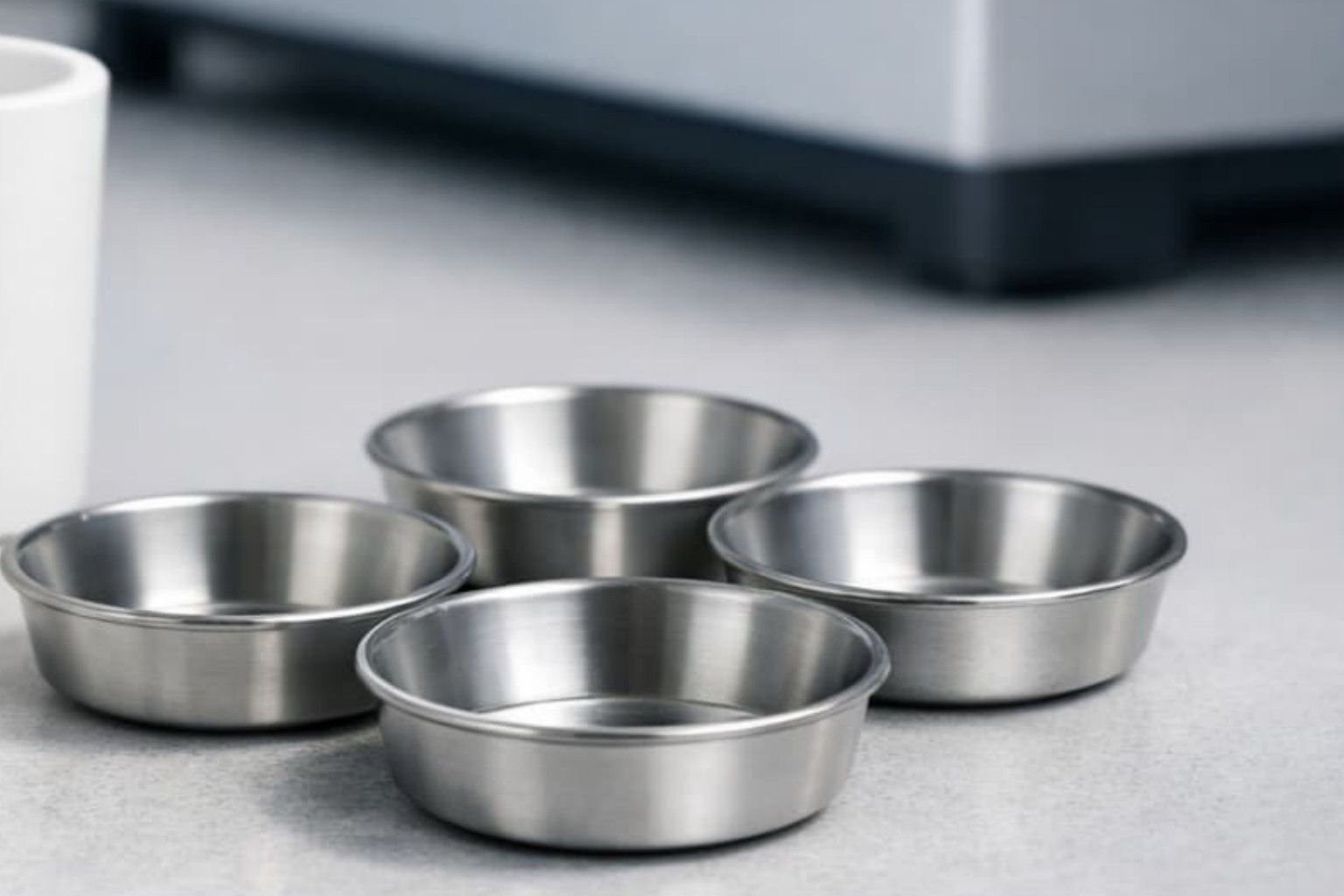
I learned firsthand how a precision-made crucible can decide the quality of a thermal experiment. My team reduced errors and improved repeatability by matching the right crucible material to each application. Let’s explore crucibles and their importance in industrial thermal analysis.
Crucibles are the first line of defense against sample loss or contamination in any thermal process. Poor-quality crucibles lead to skewed data or failed tests.
Crucibles hold the sample during heating, cooling, or phase transitions. Their material and design directly affect temperature distribution, thermal stability, and reaction with the sample.
| Function | Description | Impact on Accuracy |
|---|---|---|
| Containment | Keeps the sample secure during analysis | Stops sample loss and uncontrolled reactions |
| Thermal Conduction | Ensures uniform heat flow across the sample | Reduces hot spots and improves signal reliability (thermal conductivity) |
| Chemical Inertness | No unwanted reactions between sample and crucible | Enables clean, repeatable measurements |
| Mechanical Stability | Withstands rapid or extreme temperature changes | Prevents cracks or warping that would ruin an experiment |
I tested low-grade crucibles and quickly noticed baseline drift and inconsistent results. Only after switching to laboratory-grade crucibles did thermal data become trustworthy.
Many industries must track material changes at high temperatures. Precision crucibles are critical tools for getting clean data and keeping workflows smooth.
Aerospace, materials science, electronics, and metallurgy all use crucibles tailored to specific tests. Proper choice speeds up development, certification, and final product release.
| Industry | Use Case | Unique Requirement |
|---|---|---|
| Aerospace | Thermal stability of composites and alloys | Needs ultra-pure, high-temp crucibles for accurate melt and transition points |
| Materials Science | Phase transition and crystallinity tests | Requires even heat and chemical inertness for polymer and ceramic studies |
| Electronics | Melting and soldering process control | Demands strict size tolerances and clean surfaces (soldering) |
| Metallurgy | Alloy development, purity checks | Uses tough crucibles for repeated heating cycles and corrosive samples |
I partnered with clients from both aerospace and microelectronics. They often needed custom-sized or material-specialty crucibles for their demanding test schedules and reliability standards.
Inconsistent results waste time and resources. Crucibles that are poorly matched to the application often cause errors, noise, and even instrument damage.
A well-chosen crucible keeps every thermal property measurement true by maintaining sample integrity. This is critical when certifying materials or reporting compliance in regulated industries.
| Benefit | How Crucibles Help | Example Result |
|---|---|---|
| Repeatability | Uniform surface and stable shape in repeated heating | Enables consistent crystallization data across multiple batches |
| Purity | No leeching or sample contamination | Confirms trace elements in rare metals with no artifacts (trace elements) |
| Measurement Accuracy | High thermal stability prevents energy loss | Keeps transition temperatures sharp in compliance tests |
| Instrument Safety | Contains any overflow or spatter | Protects sensors and heating modules from sample spills |
I have been on projects where the right crucible changed a failing validation into a certified method, saving both budget and schedule.
Not all materials are suitable for high-precision work. Picking a crucible with the wrong composition can create thermal gradients, contamination, or breakage at temperature extremes.
Most laboratories use alumina, platinum, or graphite crucibles for their unique strengths. The application determines which offers the best balance of purity, cost, and durability.
| Material | Main Properties | Best Applications |
|---|---|---|
| Alumina | High melting point, simple to clean, chemically inert | Used widely in ceramics, polymers, and oxidation studies |
| Platinum | Superb thermal stability, does not react, lasts a long time | Best for high-end research where purity and accuracy drive results |
| Graphite | Great for ultra-high temperatures, resists many corrosive samples | Favored in metallurgy and synthetic crystal growth |
| Ceramic Blends | Customizable for thermal shock and cost control | Chosen in routine QA with less extreme needs |
I advise every partner to match their temperature and chemical demands with the right crucible material for smooth project progress and safe, accurate data.
Crucibles are key to accurate, repeatable thermal measurements. Careful material selection ensures reliability and helps each industry push performance and innovation further.
Contact Technical Support

C082.Wangdefu International Building, Furong, Changsha, Hunan, China


+86-19907415020