



SHOPPING CART
Your cart is empty.
shop now
Your cart is empty.
shop now
Procurement teams and lab leads face confusion in crowded OEM markets. Poor supplier choice can bring unexpected cost, risk, or even data failure for DSC analysis.
The best OEM supplier for DSC test pans will combine strict quality control, proven compatibility with industry DSC models, and transparent pricing. This safeguards reliability and keeps performance high during analysis.
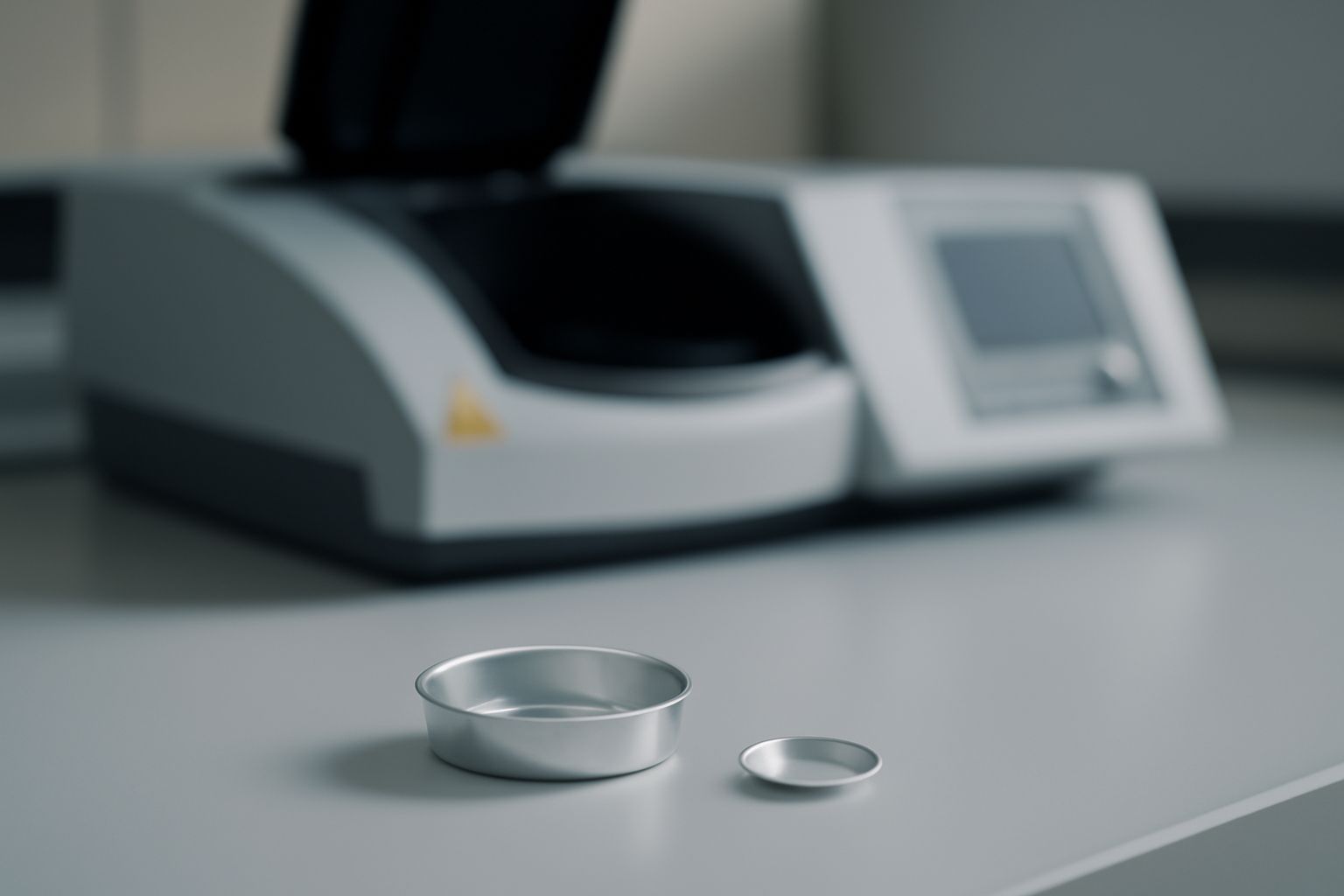
When evaluating suppliers, I have found that methodical review of material, fit, and factory process reveals much about true value. My work with multiple global labs shows success stems from setting the bar high at the start of your supply relationship.
Labs need more than a low price on their DSC pans. An OEM supplier must show technical depth and solid product quality at every step.
Key factors include manufacturing capability, raw material source, track record with established labs, and a clear quality assurance path.
| Factor | What to Look For | Why It Matters |
|---|---|---|
| Manufacturing Standards | ISO or similar certification, automation | Enables consistent product (see ISO 9000) |
| Material Quality | 99.99% aluminum or spec-fit for need | Reduces contamination and error |
| Industry References | Established B2B customer list, reviews | Proof of reliable supply and compliance |
| Quality Documentation | Batch reports, traceability, test logs | Easier audits, better troubleshooting |
My best outcomes came with suppliers willing to share full QA files and customer references. I always ask new OEMs to send recent batch documentation and materials certificates before contracting. This initial screening cuts downstream risk and clarifies who is ready for strict labs. To know more about ISO standards, see Wikipedia.
Lab results depend on seamless pan integration with branded DSC analyzers. Mismatched sizes or metals produce noisy data and halt progress.
Reliable OEMs measure and produce pans to exact specifications, matching each DSC brand and model. They verify pan shape, rim, and batch tolerance before delivery.
| Compatibility Area | OEM Practice | Benefit |
|---|---|---|
| Dimension match | Samples from OEM, client, and spec sheets | Guaranteed fit on device |
| Material and finish | Matches conductivity and sealing needs | Stable baseline and repeat tests |
| Device simulations | Tested with real machines (client or factory) | Proof before batch production |
| Custom fit options | Supports non-standard or legacy devices (DSC equipment) | Keeps rare labs running |
I request both paper specs and test pans before placing a large order. Some OEMs now offer 3D scans to check fit prior to manufacturing, which lowers error risk. For unique test setups or legacy machines, the ability to adapt dimensions is essential. More about DSC analyzers and compatibility can be found at Wikipedia.
Low price and fast supply sometimes hide unexpected problems in OEM deals. Planning and vetting help avoid expensive mistakes.
Pitfalls include hidden material substitutions, inconsistent batch quality, and incomplete matching with DSC hardware. Poor documentation can slow audits and limit troubleshooting.
| Risk Area | Common Issue | How to Avoid |
|---|---|---|
| Raw materials | Undisclosed alloy or impure stock | Ask for batch certificates, run independent checks |
| Batch variability | Dimension or finish variation | Spot check new lots with gauges |
| Poor fit for device | Device jams, leaking, lost samples | Send samples, test before main contract |
| Missing certificates | No traceable QA or test logs (quality assurance) | Specify doc checks in contract |
I caught more than one “bargain batch” with issues using simple calipers and random spot checks. Requiring sample pans before committing to full orders has become a non-negotiable step. For details on QA in procurement, check Wikipedia.
Pricing remains a main concern, but cost cuts can never come at the expense of reliability. True OEM value is about lean manufacturing and smart material use.
Competitive OEMs invest in automation, local sourcing, digital QC, and flexible packaging. They can offer bundled prices for volume buyers, keeping both cost and risk low.
| OEM Cost Strategy | Quality Assurance | Buyer Benefit |
|---|---|---|
| Factory automation | Reduces manual errors, stable run rate | Lower unit price, better consistency |
| Bulk material sourcing | Stable feedstock, fair market pricing | Savings passed to customer |
| Digital inspection reports | Quick identification of issues (inspection methods) | Faster troubleshooting, fewer disputes |
| Custom packaging for volume | Reduces transport breakage rates | Lower shipping cost, more usable pans |
I have received offers that looked too good to be true, only to find batches failed my inspection. Choosing an OEM with a clear cost-control plan and proven digital QC helps. Bundled services sometimes mean a lower total cost of ownership, not just a cheaper invoice. Find out more about inspection methods at Wikipedia.
Choosing the best OEM supplier for DSC pans means setting strict quality benchmarks, confirming compatibility, managing risk, and seeking value—not just low prices—at every step of the process.
Contact Technical Support – info@redthermo.com

C082.Wangdefu International Building, Furong, Changsha, Hunan, China


+86-19907415020