



SHOPPING CART
Your cart is empty.
shop now
Your cart is empty.
shop now
Thermal analysis depends on correct crucible choice. Misaligned specs lead to failed experiments and lost accuracy. Many labs do not fully grasp these spec details before purchase.
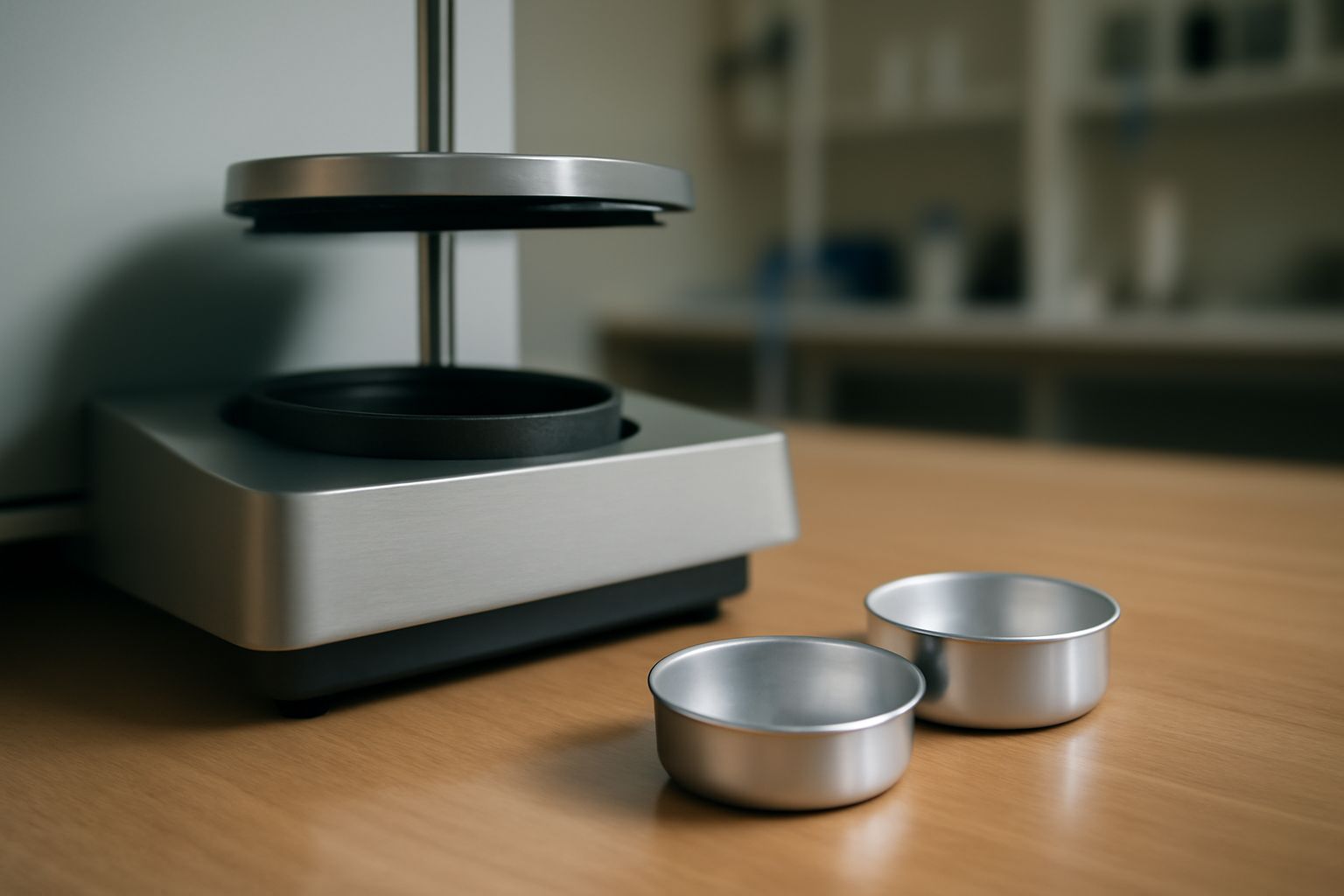
Key specifications for DSC aluminum crucibles include dimensions, alloy content, working temperature, and surface finish. Understanding these will improve test reliability and thermal data consistency.
It is important to look closely at each technical parameter. When I focus on these details before buying or testing, my results become more accurate and meaningful for each material or sample studied.
Dimensions control fit, repeatability, and sample response. Even small deviations in size can lower sensitivity, mix the sample wrongly, or block proper heat flow during a run.
Diameter, height, thickness, and volume must match your DSC equipment and the sample size for your experiment. Standardization matters most for multi-lab collaboration.
| Parameter | Typical Range | Purpose/Effect |
|---|---|---|
| Inner Diameter [Diameter] | 5.0–6.7 mm | Sample seating and heat transfer |
| Height | 2.0–3.0 mm | Accommodates target sample weights |
| Wall Thickness | 0.1–0.2 mm | Affects heat sensitivity and response time |
| Volume | 20–60 μL | Sets the limit for sample amount per run |
I always measure pans on arrival using calipers and test fill volume before setting up new DSC programs (source).
The type and purity of aluminum alloy decide thermal conductivity and chemical stability. The wrong alloy composition risks side reactions or uneven base signals.
Choose crucibles with high-purity aluminum, free from heavy metals or toxic additives. A known alloy formula ensures trust in test comparison and longevity of lab results.
| Alloy Component | Typical Content | Result in DSC Application |
|---|---|---|
| Aluminum [Alloy Types] | ≥99.99% | Most stable baseline and best peak clarity |
| Silicon | <0.01% | Improves castability, but too much affects readings |
| Iron | <0.005% | Too much causes oxidation, affects calibration |
| Copper/Zinc/Mg | Trace or 0% | Can raise reactivity; usually minimized |
When buying in bulk or for regulated work, I always ask for alloy specs and a materials certificate for every batch.
Each type of aluminum crucible has a safe operating temperature. Using them beyond this range may lead to deformation, loss of measurement accuracy, or safety risks.
Standard aluminum crucibles run from –110°C to 600°C. Some special designs handle higher, but for most organic and polymer testing, this range fits all needs.
| Crucible Type | Temperature Range | Typical Laboratory Use |
|---|---|---|
| Standard Aluminum [Calorimetry] | –110°C to 600°C | Polymers, drugs, food, phase transitions |
| Sealed/High-Pressure Al | Up to 500°C (sealed environment) | Volatile or air-sensitive samples |
| Platinum Crucibles | Up to 1600°C | Metals, high-end ceramics, specialty glass |
I check the recommended temperature range for each experiment, especially when testing new sample classes or changing heating rates.
Surface finish affects wetting, chemical interaction, and sample transfer. A rough or unfinished pan may catch samples or add extra thermal resistance.
Choose crucibles with a smooth, bright finish. This helps avoid contamination and supports even sample placement, both of which keep measurement results clean and reliable.
| Surface Qualities | Target Finish | Effect on Results |
|---|---|---|
| Smoothness [Surface Finish] | Mirror or matte, clean appearance | Better heat transfer, no sample hang-up |
| Residue-Free | No oil, dust, or manufacturing debris | Prevents contamination and baseline drift |
| Uniform Thickness | Consistent feel, no dents or pits | Reduces measurement standard deviation |
A careful inspection of new pans under good light helps spot surface flaws before a run and saves time redoing failed experiments.
Choosing DSC aluminum crucibles on real technical specs helps protect lab results and workflow. Focus on key parameters to achieve accurate, reliable thermal analysis every time.


C082.Wangdefu International Building, Furong, Changsha, Hunan, China


+86-19907415020