



SHOPPING CART
Your cart is empty.
shop now
Your cart is empty.
shop now
Testing with the wrong sample pan can ruin results and waste resources. Understanding technical specifications guides you to reliable thermal analysis outcomes every time.
Key technical specifications for small pack DSC sample pans include size, material, and temperature range. Picking the right design helps ensure accurate thermal analysis and consistent experimental results in any lab setup.
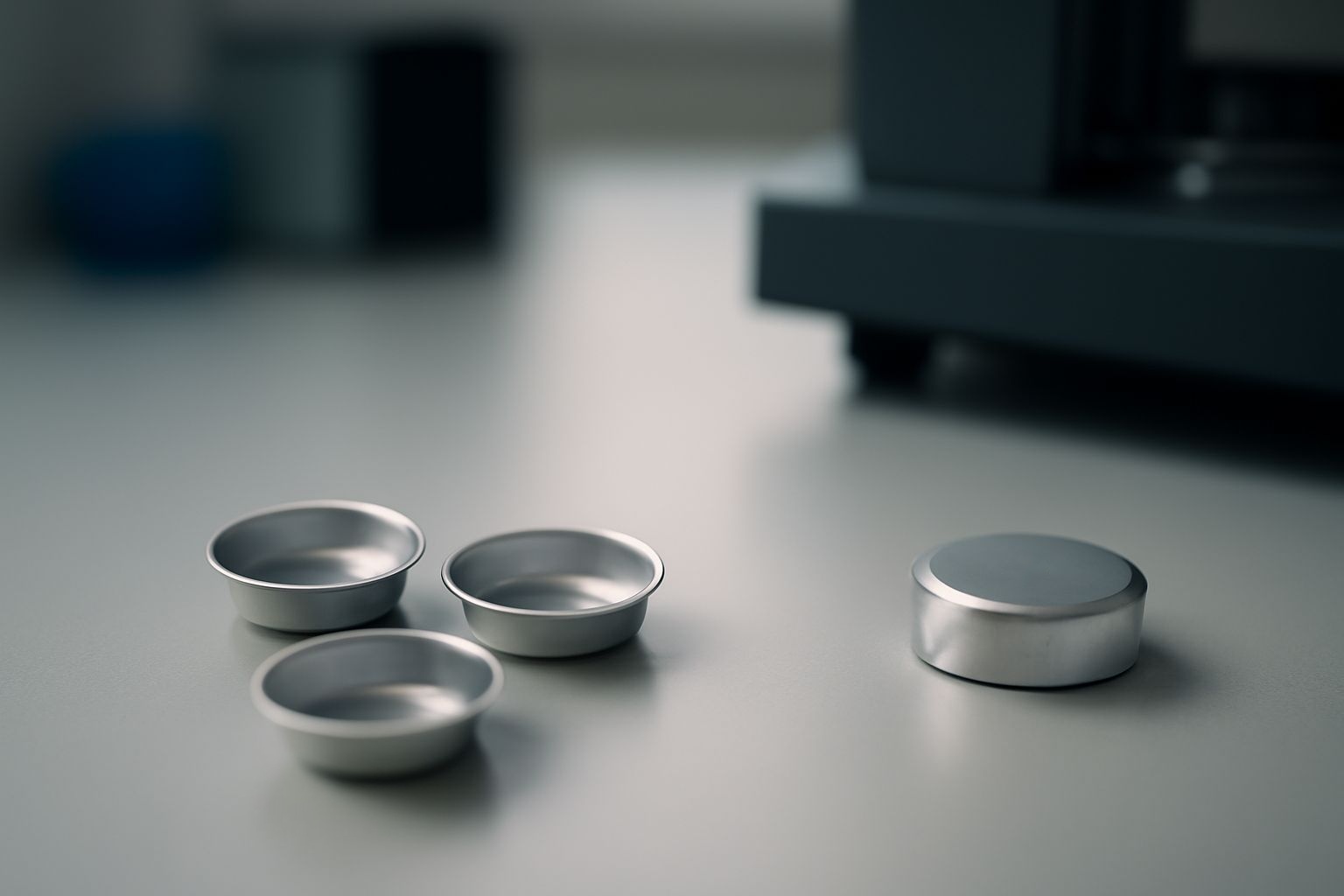
Every step in my lab depends on correct data, which starts with using the right consumables. I have seen failed tests and lost time from using pans that did not match the method or sample. To prevent costly mistakes and make every test count, I focus on the physical and chemical properties of each pan and double-check technical details before any experiment begins.
I have encountered failed tests because the pan size was not right for the instrument. Picking the correct dimensions avoids these problems.
Standard sizes for small pack DSC sample pans include diameters from 5 mm to 8 mm and depths from 1 mm to 3 mm. Always check your instrument’s manual for model-specific requirements.
Laboratory instruments often require a precise match between the pan and the sample holder. If a pan is even slightly too big or too small, thermal readings will shift, producing unreliable results. Many established brands specify their own standard sizes but most pans fall into a common range. Small pack options usually cover the diameter and depth demanded by differential scanning calorimetry methods. I always recommend reviewing the technical datasheet before purchasing. Matching lid design is also key. Some samples need flat lids, while volatile or sensitive samples need pans with vented or crimped covers. The following table provides a clearer overview of typical dimensions and when to use each:
| Pan Type | Diameter (mm) | Depth (mm) | Sample Volume (μL) | Main Use |
|---|---|---|---|---|
| Standard Aluminum | 6.5–7.0 | 2.0–2.5 | 30–60 | Routine polymer, pharmaceutical |
| Mini Aluminum | 5.0 | 1.0 | 10–15 | Micro-sample, fast heating rate |
| Large Volume | 8.0 | 3.0 | 100–120 | Bulk, melting studies |
| Custom/Sealing | Varies | Varies | Depends | Volatile, oxygen-sensitive compounds |
Using the wrong material in a sample pan can make the experiment fail or give bad data. Pan composition matters as much as the sample itself.
Material properties such as purity, thermal conductivity, and reactivity impact heat flow measurement accuracy. Choose pans made of high-purity aluminum or platinum for reliable, repeatable data.
I have learned that even small differences in material make a huge change in measurement. Aluminum pans work well for most samples, offering good thermal conductivity and affordable cost. For advanced or sensitive methods, high-purity aluminum (99.99%) or platinum pans become necessary because they reduce contamination and increase data stability. Some plastics and sealed composites allow for special sample needs, such as working with water-rich or biological materials. High purity and correct surface finish also support accurate heat transfer, as surface oxidation or low-grade alloys cause poor baseline and drifting. Here’s a summary of the most common materials used in DSC testing and their strengths:
| Material | Purity (%) | Thermal Conductivity | Best for Samples | Comment |
|---|---|---|---|---|
| Aluminum | 99.5–99.99 | High | General polymer, pharmaceutical | Economical, easy to seal |
| Platinum | 99.95+ | Very High | High-temp, oxidation studies | Expensive, ultra-stable |
| Gold-coated | 99.99 | High | Corrosive or reactive | Protective, for specific chemicals |
| Polymer/Composite | -- | Variable | Biological, moisture-rich | Non-reactive, lower temp only |
See details in laboratory handbooks or scientific literature for guidance on choosing the ideal pan material for each application.
Exposing pans to too much heat breaks them or causes false data. Every pan design has a different temperature limit based on its material.
The temperature range for small pack DSC sample pans typically runs from -150°C to 600°C for aluminum pans and up to 1600°C for platinum pans. This range covers most research and QA methods.
When selecting pans, I always check the temperature ratings to fit the full scope of my method. Using aluminum pans beyond their safe limit warps or oxidizes them, even causing test failure or damage to the sensor. For routine polymer or drug studies, most pans work up to about 600°C, which fits nearly all basic thermal analysis needs. For research on metals, ceramics, or oxidation reactions, platinum pans offer much higher safety and a stable baseline at extreme heat. The table below lists common pan types and their recommended limits:
| Pan Material | Lower Temp Limit (°C) | Upper Temp Limit (°C) | Main Applications |
|---|---|---|---|
| Aluminum | -150 | 600 | Normal organics, polymers |
| Platinum | -100 | 1600 | Inorganic, ceramics, metal studies |
| Gold-Coated | -75 | 600 | Harsh chemicals, high-purity needs |
| Polymer/Composite | -50 | 200 | Life sciences, moisture work |
For further reading on pan performance under heat, reference industrial sources such as Sigma-Aldrich knowledge base.
Getting clear thermal readings starts with the right pan design. Small changes in design cause shifts in baseline, sensitivity, and overall accuracy.
Design variations such as shape, lid type, and closure method can directly affect test accuracy. Always use the pan design specified by your instrument and test protocol for best results.
I have found that not all sample pans are equal, even from the same supplier. Some designs hold the sample evenly, helping heat spread in the right way. Vented lids work best for studies involving evaporation or volatile samples. Flat-bottom pans spread heat well, while pans with ribs or thick bases suit heavy or reactive materials. The closure method—pressed, crimped, or snap-on—affects both seal integrity and the safe handling of sensitive compounds. Not following your method’s requirements can shift enthalpy readings or drift the baseline. I often compare, adjust, and test new designs to keep results reliable. The table below sorts common design options and their main effects on DSC data:
| Design Feature | Purpose | Main Effect | Tip |
|---|---|---|---|
| Flat/Large Pan | Even heat distribution | Stable baseline, high accuracy | Good for most solid samples |
| Vented Lid | Pressure relief | Handles evaporation, avoids explosion | Required for moisture, organics |
| Crimped/Snap-On Lid | Tight closure | Better seal, less contamination | Pick for air-sensitive/volatile tests |
| Thick Base/Ribbed | Withstand heavy samples | Prevents warping at high temp | Best for metals/ceramics |
Find more discussion on test reliability and design impacts in the calorimetry topic on Wikipedia.


C082.Wangdefu International Building, Furong, Changsha, Hunan, China


+86-19907415020