



SHOPPING CART
Your cart is empty.
shop now
Your cart is empty.
shop now
Every year, more labs and manufacturers switch to universal crucibles, seeking efficiency, cost control, and flexibility as sample demands multiply.
The universal crucibles market is driven by rising demand in material science, pharmaceuticals, and electronics. Manufacturers push advances in quality and compatibility to keep pace with global requirements.
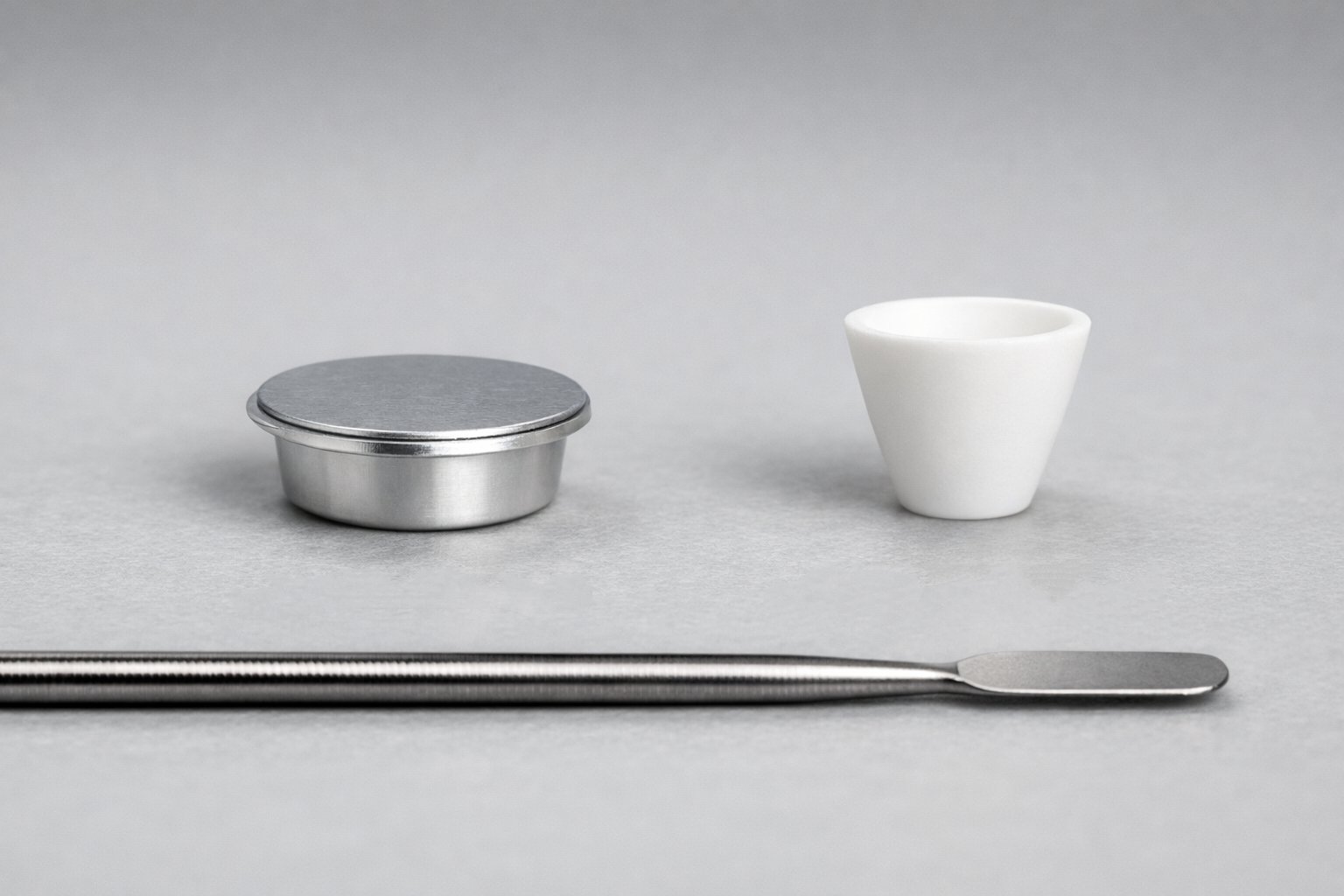
I watch purchasing patterns rise across multiple industries, especially as product cycles tighten and analysis standards grow stronger worldwide.
Laboratories and materials production lines work under rising throughput pressures. Legacy pans no longer meet the needs of multiple equipment brands or fast switching between tests.
Demand for universal crucibles is rising globally, led by material science, chemical analysis, and advanced manufacturing. Bulk orders and wide procurement are now standard practice.
| Industry Segment | Demand Level | Growth Trend | Evidence/Source |
|---|---|---|---|
| Material Science | High | 10%+ annual | Materials Science |
| Chemical Analysis | Rising | 8-10% annual | Analytical Chemistry |
| Electronics & Semiconductors | Solid | 9% annual | Semiconductors |
| Pharmaceuticals | Rising | 7-9% annual | Pharma Industry |
My own order book and third-party market reports both show climbing volumes for universal crucibles as material science projects expand worldwide.
Chemistry and testing move fast, so manufacturers must improve material choices, fit, and quality. They answer new application needs with better crucible options.
Key innovations include new alloy blends, automated production for tighter tolerances, multi-brand compatibility, and eco-friendly or high-durability coatings.
| Innovation Type | Main Benefit | Market Impact | Reference |
|---|---|---|---|
| High-purity alloys | Wider temp range, reduced contamination | New R&D applications enabled | Alloy |
| Universal rim/sizing | Cross-brand fit | Lab switching costs drop | Interoperability |
| Automated/robotic ready | Batch-to-batch precision | Supports new high-throughput systems | Lab Automation |
| Green coatings/materials | Lower eco impact, safe disposal | Preferred by top brands | Eco-Tech |
I have seen customer requests grow for automation-ready and lower-carbon products. New innovations make it easier to meet evolving regulatory and performance requirements.
Rapid project launches, smaller lots, and more equipment types all put pressure on labs. Efficient, flexible consumables are needed to avoid waste and delays.
Growth is driven by the demand for broader analyzer compatibility, supply stability, and lower long-term inventory in industries from pharma to aerospace.
| Growth Factor | Impact Area | Growth Contribution | Info Link |
|---|---|---|---|
| Testing Flexibility | All R&D and production labs | Drives universal adoption | Flexibility |
| Cost Savings | Procurement, waste, labor | ROI for high-throughput labs | ROI |
| Quality Control | Less test error, better repeatability | Customer loyalty, more orders | Quality |
| International Demand | Global industry standards | Scaled-up supply networks | Globalization |
I have helped multiple new entrants design global supply and QA plans that depend on universal crucibles for raw flexibility and rapid project scaling.
Shifts in regulations, tech upgrades, and supply chain control will reshape the crucibles market. Labs will want versatility to handle new tests and quick adaptation.
The market is forecast to grow 8-10% annually through 2029, with the strongest gains in Asia-Pacific, Europe, and for labs making automated and eco-friendly upgrades.
| Region | Forecast Growth Rate | Main Sector | Reference |
|---|---|---|---|
| Asia-Pacific | 10-12% CAGR | Electronics, Chemical, Pharma | APAC |
| Europe | 8-9% CAGR | Automotive, Aerospace, Materials | Europe |
| North America | 6-7% CAGR | Biotech, Research Labs | North America |
| Global | 8-10% CAGR Avg | Industry-wide | Global Market |
I prepare for stronger orders from APAC and Europe as automation, strict QA, and universal fit move mainstream. Many labs have budgets for these upgrades now.


C082.Wangdefu International Building, Furong, Changsha, Hunan, China


+86-19907415020