



SHOPPING CART
Your cart is empty.
shop now
Your cart is empty.
shop now
Buying the wrong crucible can ruin your DSC results or waste money. Knowing technical details keeps your experiments accurate and safe from unexpected problems.
To buy the right DSC crucible online, focus on its material, temperature range, sample volume, and sealing type. These factors affect test accuracy and sample integrity.
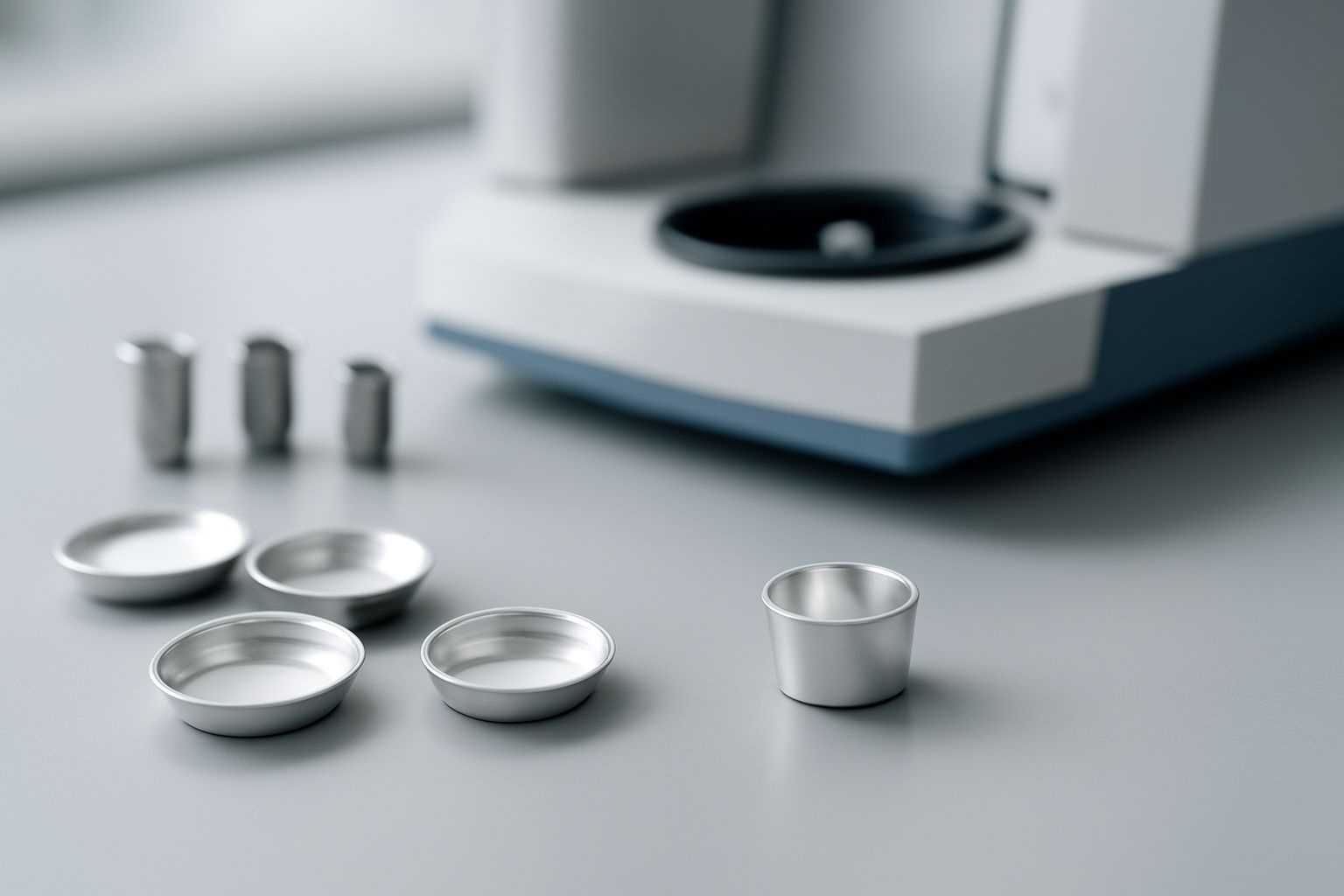
I always start with a checklist before I select crucibles online. Understanding how specifications relate to my method ensures I never need to redo experiments or worry about sample loss.
If the crucible material reacts with your sample or melts under test conditions, your experiment will fail. Always verify composition before you buy online.
Material composition determines chemical resistance and heat stability. Choose high-purity aluminum or platinum for most DSC studies to ensure reliable, precise thermal response and avoid contamination.
I have seen tests fail because a supplier shipped generic alloys instead of 99.99% aluminum or platinum. The right material guarantees consistent heat flow and avoids unwanted chemical reactions between the crucible and sample. I double-check the material properties each time I compare products. Many certified lab crucibles now list their exact alloy composition online so buyers can match their needs. The table summarizes typical materials and their suitability:
| Material | Max Temp (°C) | Chemical Resistance | Main Usage |
|---|---|---|---|
| 99.99% Aluminum | 600 | Good (organics, polymers) | Routine DSC work |
| Platinum | 1600 | Excellent (inorganics, metals) | High-temp, reactive samples |
| Ceramic | 1400 | Very good (corrosive samples) | Specialty analysis |
| Gold-Coated | 1000 | High (oxidation) | Trace analysis, anti-stick |
Studies in materials science support matching composition to each application for best thermal results.
Pushing a crucible past its temperature limit risks warping, melting, or poor test data. Matching the DSC range and crucible helps avoid equipment failure and test repeats.
Select a crucible with a maximum temperature rating above your highest test point. Common DSC pans handle 600°C; specialty metals reach 1400°C or higher for advanced studies.
I never use standard aluminum pans for high-temperature work. Instead, I switch to platinum or ceramic for tests above 600°C. Online stores list temperature limits by model or material, so I compare specs from suppliers and confirm referenced standards. Ranged pans perform better and last longer. When buying crucibles for industrial thermal work, I check the instrument’s method file and pick the right pan for the job. Standards like ASTM help ensure test safety. See how temperature thresholds compare:
| Crucible Material | Typical Max Temp (°C) | Field/Application |
|---|---|---|
| Aluminum | 600 | General DSC, polymers |
| Gold-Coated | 1000 | Oxidative, sticky samples |
| Ceramic | 1400 | Corrosive, salt studies |
| Platinum | 1600 | High temp R&D, inorganics |
Product specs often reference thermal analysis practices for choosing optimal ranges.
Too large or small a crucible leads to noise, inaccurate curves, or low sample yield. Matching volume to sample size brings repeatable, valid results.
Pick a DSC crucible with an internal volume that fits your typical sample weight (often 5–50 mg or µL). Proper sizing boosts signal clarity and avoids messy spillage.
I check method requirements and select 10–20 µL for polymer or pharmaceutical analysis, increasing capacity for bulkier or less dense materials. Supplier websites usually list inner diameter and volume. I review calibration tips for consistent sample placement. Larger crucibles can trap more air or cause uneven heating, while smaller ones risk overflow if overdosed. The table helps break down volume choices for common DSC applications:
| Analysis Type | Recommended Volume (µL) | Reason |
|---|---|---|
| Polymer DSC | 10–20 | Best signal, easy handling |
| API/Pharma | 5–15 | High-precision, low mass |
| General R&D | 10–50 | Flexible for many materials |
| Inorganic/Metal | 30–50 | Bigger sample, high-energy |
Proper sample loading and volume choices improve data quality in every run.
Any sample leak or gas loss ruins data. Picking the right sealing ensures your crucible protects, not contaminates, your experiment.
DSC crucibles come in crimped, hermetic, or vented styles. Choose the sealing type based on your sample’s volatility, the thermal profile, and risk of contamination.
I use crimped seals for dry or solid samples and hermetic seals for moisture-sensitive or volatile materials. Vented crucibles work when gases must escape, like decomposing polymers. Many online platforms show cross-sectional photos or schematics for each type. When a product does not list sealing details, I reach out to customer support before buying. Safety and repeatable analysis depend on picking the right closure. For more on sample containment, I often cite containment theory in lab documentation. Here’s a summary table:
| Sealing Type | Main Use | Advantage | Limitation |
|---|---|---|---|
| Crimped | Routine, dry samples | Simple, affordable | Not airtight |
| Hermetic | Volatile, moisture tests | No leak, guards against contamination | May require special tools |
| Vented | Gas-releasing, thermal decay | Prevents pressure buildup | Not for liquids |
Good sealing selection is outlined in sample preparation standards for DSC.


C082.Wangdefu International Building, Furong, Changsha, Hunan, China


+86-19907415020