



SHOPPING CART
Your cart is empty.
shop now
Your cart is empty.
shop now
Bad crucible material choices cause wasted samples, unreliable results, and confusion with every thermal analysis test. It is a problem I have faced before.
Incorrect DSC crucible material selection leads to chemical reactions with samples, false heat flow signals, instrument contamination, and data inaccuracies. Pick a material compatible with your sample and method to prevent these costly mistakes in every test.
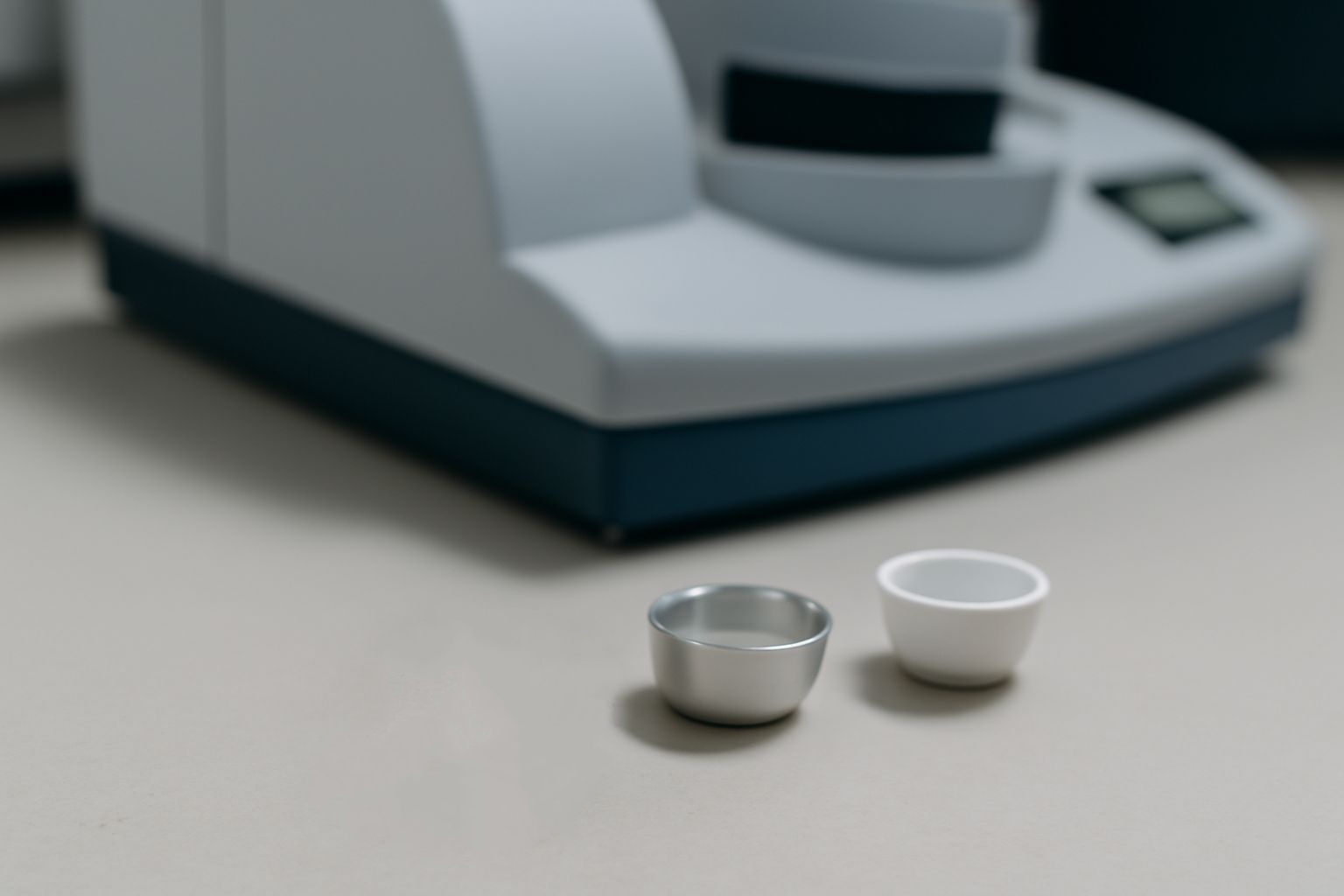
If you want your DSC testing to give true answers, always focus on the material first. Many of the worst errors trace back to simple incompatibility or ignoring technical details. In this article, I go through the most common issues and show my own steps for getting reliable results.
Mismatched crucibles show up as strange heat flow curves or inconsistent baselines in DSC analysis. These errors can hide real sample behavior.
Resolve DSC analysis discrepancies by reviewing your crucible’s material, checking for contamination, re-running empty pan baselines, and comparing to trusted references. Always make sure your crucibles are pure, clean, and matched to your sample chemistry and equipment recommendations.
| Action | Details | Expected Impact |
|---|---|---|
| Check compatibility | Review manufacturer’s lists (DSC basics) and previous successful settings | Avoids mismatching pan and sample |
| Run empty pan baseline | Start a DSC scan with unfilled crucibles | Reveals background heat capacity or drift |
| Control contamination | Clean all crucibles in the same way, use gloves, inspect for residues | Prevents false signals and cross-sample errors |
| Use high-purity materials | Choose 99.99% aluminum, platinum, or gold pans as needed | Keeps signals stable, reduces interference |
| Compare with standards | Run a well-known standard sample | Identifies whether error is with crucible or method |
I have solved analysis mismatches by following each of these steps. If the baseline or sample peaks look very different from the standards, I replace or re-clean the crucible, then double-check the pan type. Recent publications confirm that matching the material to the sample is the fastest way to fix DSC errors and restore confidence in results.
DSC crucibles do not last forever. Wear, corrosion, and cracks can introduce errors you might not see at first.
Signs of crucible material failure include visual deformation, surface cracks, discoloration, weight loss, and unpredictable heat flow signals. Always inspect crucibles between runs, and replace any that show signs of damage or residue buildup.
| Failure Sign | How to Check | Impact on Analysis |
|---|---|---|
| Deformation or melting | Change in shape, lid does not fit, warping after use | Poor seal, sample leak, inaccurate results |
| Surface corrosion | Pitting, dull color, flaky patches visible | Introduces impurities, reacts with fresh samples |
| Cracking or breaking | Cracks around rim or base, rattling sound | Sample loss, danger of instrument contamination |
| Discoloration | Brown, blue, or black stains not removable by routine cleaning | Permanent chemical change, signal interference |
| Unstable baseline | Baseline drift, noisy signal | Hidden failure, baseline cannot be trusted |
After each experiment, I use a magnifier to check all crucibles for cracks, stains, or shape changes. Some failures are easy to miss without a close look. Scientific handbooks and quality control guidelines recommend regular, documented pan inspection and replacement schedules to avoid these issues.
Accuracy in DSC starts with the crucible. Even the best instruments cannot make up for the wrong material or poor pan quality.
To improve DSC analysis accuracy, match the crucible material to your sample’s chemistry and test temperature. Use high-purity, well-made pans, follow strict cleaning protocols, and replace damaged crucibles right away for stable, trustworthy results.
| Material/Practice | Why It Matters | Effect on Accuracy |
|---|---|---|
| Aluminum (high-purity) | Low cost, high thermal conductivity, non-reactive to most samples (aluminum basics) | Clean signal, fast heating, repeatable readings |
| Platinum/Gold | Handles extreme temperatures, fully inert, does not oxidize | Very low background, stable baseline |
| Proper cleaning and storage | Prevents cross-sample contamination, extends lifespan | Reduces risk of error, improves repeatability |
| Temperature-range matching | Use pans rated for your protocol | Avoids deformation and sample loss |
| Regular replacement schedule | Retires pans before defects show up | Maintains quality control, ensures trust in every result (AQC explained) |
When I use a strict routine—careful pan selection, routine cleaning, and discarding old pans—I see stronger, more repeatable results every time. Lab studies back up this approach. With accurate pairing and preventive care, my DSC tests deliver clear transitions and minimal baseline drift.


C082.Wangdefu International Building, Furong, Changsha, Hunan, China


+86-19907415020