



SHOPPING CART
Your cart is empty.
shop now
Your cart is empty.
shop now
Crucible failure in thermal measurement leads to lost samples, wrong results, or even lab accidents. Many users overlook detailed specifications and end up facing preventable problems.
Crucibles for thermal measurement must meet precise technical standards: stability under high temperature, tight tolerances, resistance to thermal shock, and correct sizing for the equipment. These criteria guarantee reliable data and safer work.
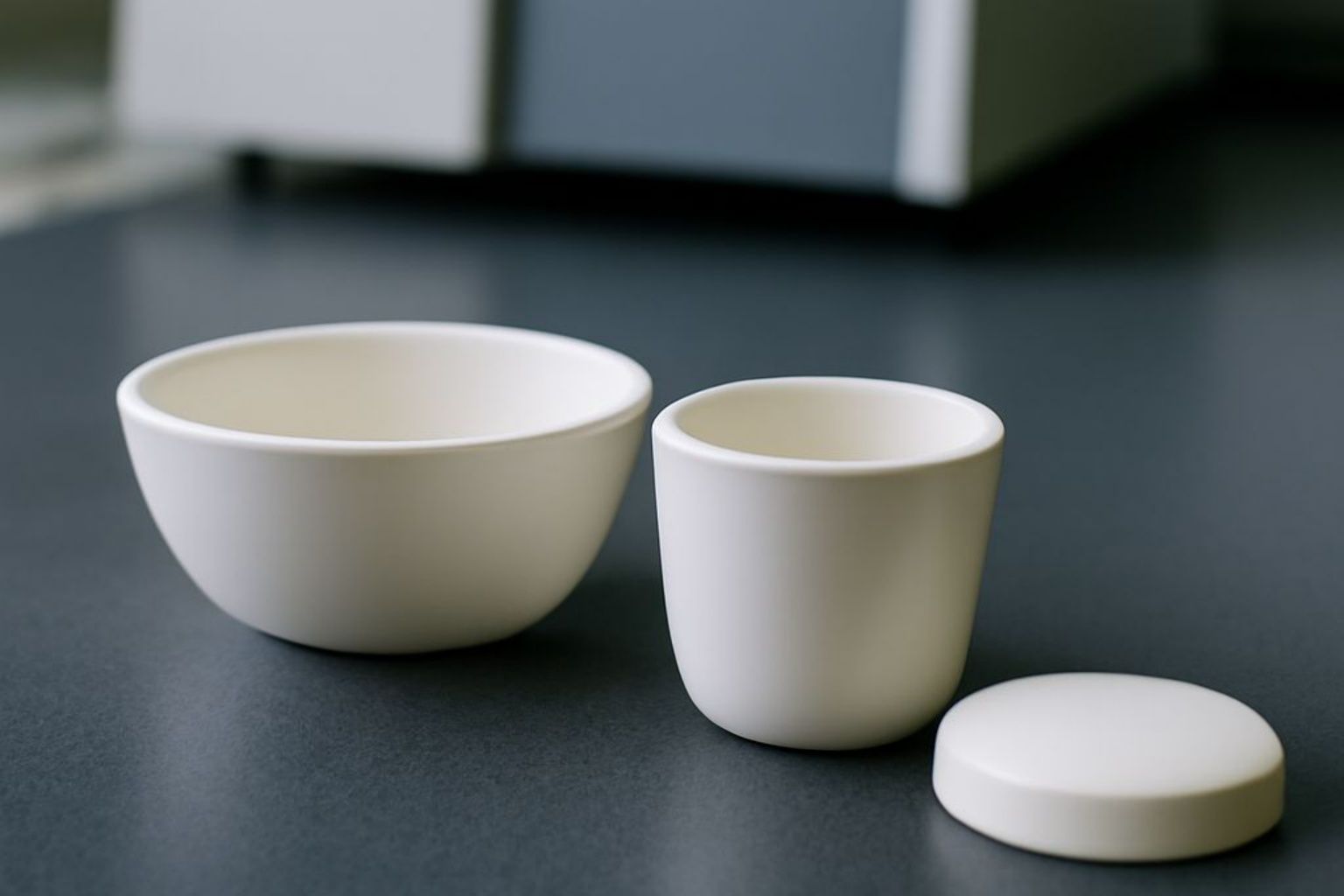
In my own testing, the right crucible choice made the difference between consistent results and hours lost troubleshooting. Let’s examine crucial specifications and features for anyone selecting crucibles for high-temperature work.
Accurate testing is often compromised when key technical specs are ignored. Labs that overlook specs struggle with poor fit, sample spillage, or inaccurate measurements.
The most critical specs are maximum working temperature, dimensional precision, wall thickness, weight uniformity, and surface finish. Matching these specs to your method keeps data trustworthy.
| Specification | Requirement | Importance |
|---|---|---|
| Max Temperature | Withstands desired test limits without softening | Prevents distortion or melting during analysis |
| Dimensional Tolerance | ±0.01mm or better on key dimensions | Ensures snug instrument fit and reliable calibration |
| Wall Thickness | Uniform, typically 0.1–0.2mm for small pans | Supports even heating and prevents warping |
| Surface Finish | Clean, polished or treated to remove contamination (surface finish) | Lowers background noise and avoids sample contamination |
When my lab set stricter standards for buying crucibles, measurement repeatability and test yield both improved, especially across long-term projects.
Using the wrong material leads to breakage, chemical attack, or drifting thermal baselines. Each application needs careful matching of material property and experiment condition.
The main properties are melting point, thermal shock resistance, chemical inertness, and thermal conductivity. These factors affect both performance and safety in every high-heat test.
| Property | Effect | Notable Material |
|---|---|---|
| Melting Point | Defines the max usable temperature | Platinum (1768°C), Alumina (2072°C) |
| Thermal Shock Resistance | Ability to withstand rapid temperature changes | Alumina, special ceramics |
| Chemical Inertness | Reduces reactions with test samples | Platinum, high-purity alumina |
| Thermal Conductivity | Affects heat transfer rate across the pan | Graphite (high conductivity) |
My advice: Review requirements like reactivity and max temperature before placing orders, especially when testing expensive or hazardous samples.
Ill-fitting crucibles lead to data drift and unsafe handling. Good sizing and proper shape keep tests reliable and the lab environment safe.
Size and shape match is critical for equipment compatibility, accurate temperature gradients, and correct sample containment. Always check recommended specs for your instrument model.
| Size/Shape | Performance Effect | Main Use |
|---|---|---|
| Standard Round | Uniform heating, easy handling | General DSC, TGA, and lab tests |
| Deep Well | Handles bulky or volatile samples | Specialty research or high-volume runs |
| Mini/Micro | Lower background noise, for small samples | Trace analysis, pharma quality control |
| Custom Shapes | Match unique equipment or method | Industrial and R&D tailored projects |
I helped teams avoid costly sample loss and data outliers just by reviewing system fit before ordering new crucibles for each piece of equipment.
Overlooking safety features turns crucible use into a risk. Each high-temp application needs built-in protection for both sample and lab staff.
Important safety points include lid fit, non-reactive coatings, appropriate thickness, and clear labeling. Each reduces accidents by making the process predictable and simple.
| Feature | Purpose | Effect on Safety |
|---|---|---|
| Precision-fit Lids | Prevents sample spatter and volatile escape | Protects users and prevents contamination |
| Non-reactive Coatings | Guards against chemical attack and damage | Helps maintain pan integrity and user safety |
| Clear Marking | Identifies batch and temperature limits | Avoids misuse and overexposure |
| Reinforced Wall | Adds structural support for harsh cycles | Prevents burst or cracking at extremes |
I always look for factory-stamped specs on crucibles, especially when preparing batches for high-risk materials or tests above 1000°C.
Technical specifications in crucibles ensure precision, lab safety, and smooth workflows. Proper selection prevents measurement errors and supports consistent high-temperature performance.
Contact Technical Support

C082.Wangdefu International Building, Furong, Changsha, Hunan, China


+86-19907415020