



SHOPPING CART
Your cart is empty.
shop now
Your cart is empty.
shop now
Many labs want practical results from thermal analysis, but face issues with data reliability and ease of daily use. Choosing the right equipment is critical.
NETZSCH thermal analysis crucibles help labs and training centers reach both accurate and reproducible results in pharmaceutical, polymer, environmental, and educational scenarios.
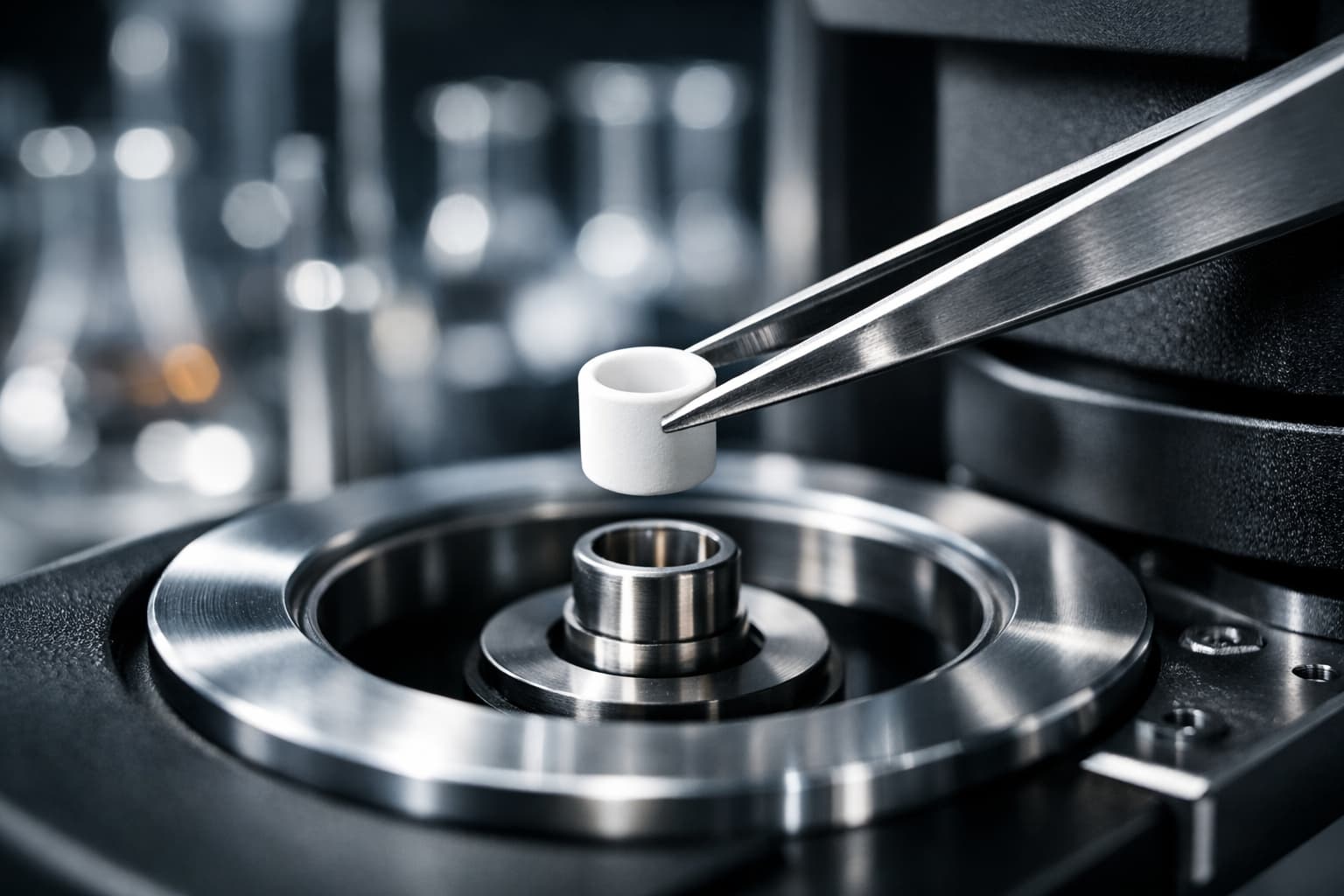
During my years in the lab, I have seen the difference good crucibles make. Confidence in results gives my teams more time for learning, research, and meeting deadlines. Every scenario has its tricks—here is what I have learned that works everywhere.
Pharmaceutical labs must prove stability, purity, and shelf life for every batch. Any small error in the process can mean costly retesting or failed audits.
NETZSCH crucibles support reliable DSC and TGA studies of drug materials, excipients, and blends—backed by high-purity metal, batch certification, and compatibility with moisture-sensitive samples.
| Lab Task | Crucible Feature | Practical Tip/Reference |
|---|---|---|
| API Melting Point Checks | High-purity aluminum, uniform volume | DSC drug standard method |
| Moisture Content | Good sealing, minimal pan mass drift | Use crimped pans for best repeatability |
| Excipients Stability | Batch-certified pans for documentation | Always log batch number for each run |
| Thermal Purity | Inert surfaces, does not bias tests | Store pans in closed boxes after cleaning |
My habit is to use fresh pans for each main batch, especially for stability studies. This lowers contamination risk, proves traceability, and helps dodge audit issues when QC teams request batch documentation.
Polymers need careful heating and cooling cycles to get true values for melting, glass transition, or degradation. Not all pans can handle repeated use or sticky blends.
NETZSCH crucibles provide uniform heating, clean baseline, and durable materials suited for batch QC, new formulation, and research into advanced plastics or composites.
| Polymer Task | NETZSCH Advantage | Reference |
|---|---|---|
| Glass Transition (Tg) | Good thermal contact, smooth pan finish | Polymer property control |
| Crystallinity Analysis | Low mass variation in large sets | Repeat pan from same batch for consistency |
| Reaction Curing | Stable under repeated 200–300°C cycles | Use standard alumina for epoxy or adhesives |
| Thermal Stability | Allows slow heating with clean baseline | Keep new/old pan sets clearly labeled |
I helped a plastics team switch from generic to NETZSCH pans for a new resin launch. Their first test runs showed tighter melting curves and better repeatability, which saved a development month.
Teaching labs need equipment that is both reliable and simple to use. Students learn more when their results are clear and their tools do not add error.
NETZSCH crucibles are ideal for teaching the basics of thermal analysis. Consistent quality allows focus on experimental skills, not troubleshooting hardware problems.
| Academic Use | Crucible Benefit | Learning Impact |
|---|---|---|
| Introductory DSC/TGA | Reusable, forgiving of handling mistakes | Less stress, more learning time |
| Group Labs | Batch uniformity, simple labeling | Easier for instructors to compare groups |
| Advanced Projects | Certified pans for capstone work | Students defend results with supplier docs (lab) |
| Safety Protocol Practice | Stands up to basic solvents/cleaning | Encourages good habits early |
I’ve seen students lose confidence when poor accessories add noise or confusion to their early labs. Switching to NETZSCH pans quickly improved class averages and lowered support questions during lab modules.
Environmental analysis faces tough samples—soil, waste, or contaminated air residues. Methods require high accuracy and reproducibility for reporting and compliance.
NETZSCH crucibles offer chemical resistance, precise volume, and ruggedness for repeated TGA, DSC, and reaction studies on water, soil, ash, or polymers in pollution testing.
| Environmental Task | Crucible Suitability | Reference |
|---|---|---|
| Soil Analysis | High-temperature tolerance, avoids baseline drift | Environmental science |
| Water Content Detection | Stable mass, prevents evaporation | Choose sealed pans or vented as needed |
| Contaminant Residue Burning | Chemical-resistant material avoids pan corrosion | Pick alumina or platinum for harsh runs |
| Airborne Particle Testing | Detects trace mass loss, supports repeated cycles | Standardize cleaning after each batch |
I guided a monitoring team during a city waste study. By standardizing on NETZSCH crucibles, the team earned better TGA precision and could report trends for months with stable baselines, even in rugged outdoor samples.
NETZSCH crucibles deliver strong, repeatable results in research, teaching, and industry. Matching pan features to the right scenario is the best way to guarantee accuracy for every project or class.
Contact Us: info@redthermo.com

C082.Wangdefu International Building, Furong, Changsha, Hunan, China


+86-19907415020